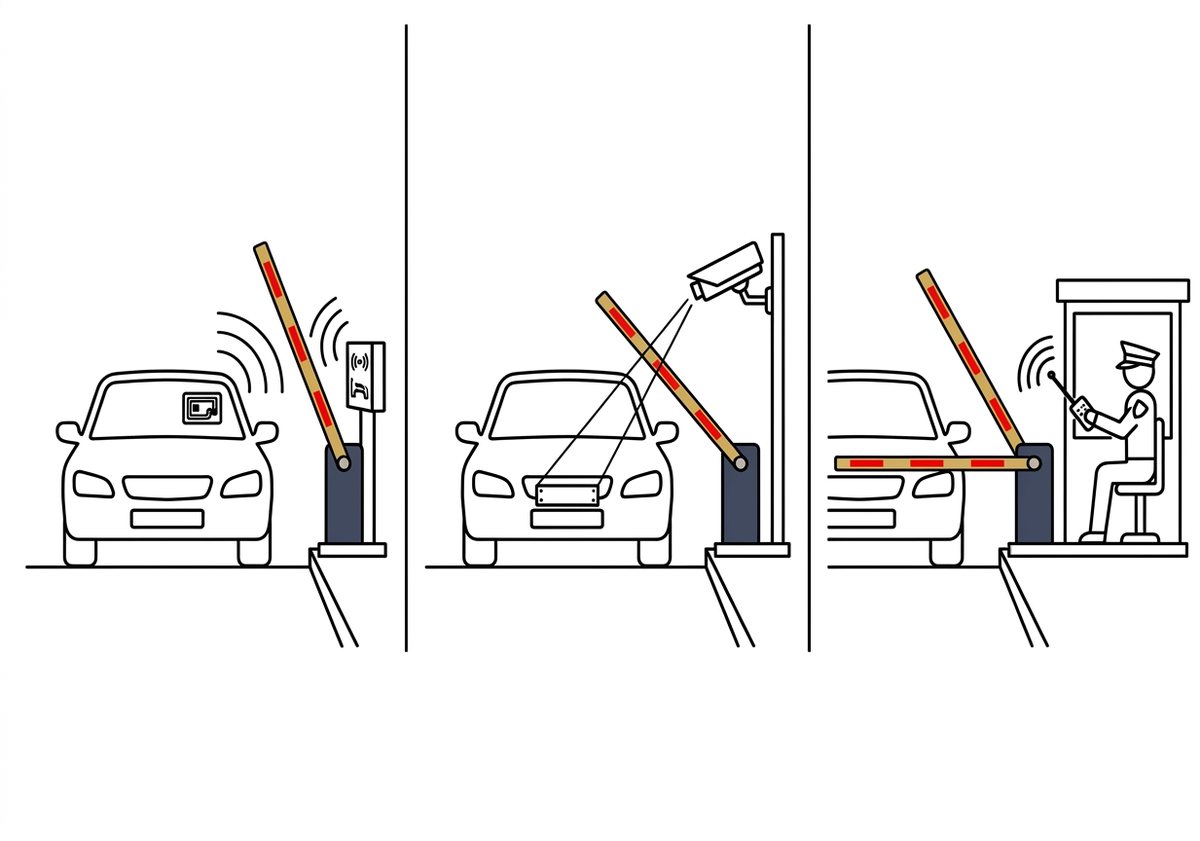
In short: Learn how to reduce queues at parking entrances in Mexico with vehicle barriers, LPR recognition, RFID, sensors, and efficient lane design.
Queues at a parking entrance usually appear when the identification, authorization, and opening process takes longer than the interval between arriving vehicles. A faster barrier can help, but it will not by itself solve lane design problems, manual validation, slow payments, or incomplete records. An effective solution combines vehicle flow, access control, safe detection, and a well-organized operation.
In Mexico, this challenge shows up in commercial parking lots, condominiums, hospitals, industrial parks, and distribution centers, especially during peak hours. Before buying equipment, measure where the queue forms, how long each operation takes, and which types of users arrive: residents, visitors, employees, suppliers, or carriers.
Record the number of vehicles arriving in 15-minute intervals, the time from when a vehicle stops until it is authorized, the opening and closing time, and the duration of any manual check. Also observe whether the queue blocks the street, the ramp, a pedestrian entrance, or an emergency lane. This data helps distinguish a capacity problem from a process problem.
Calculate the average time and the time during peak demand, but do not limit yourself to the average: identify the slowest operations and the variations between weekdays, weekends, and special events. A baseline measurement lets you later verify whether the solution actually reduces waiting.
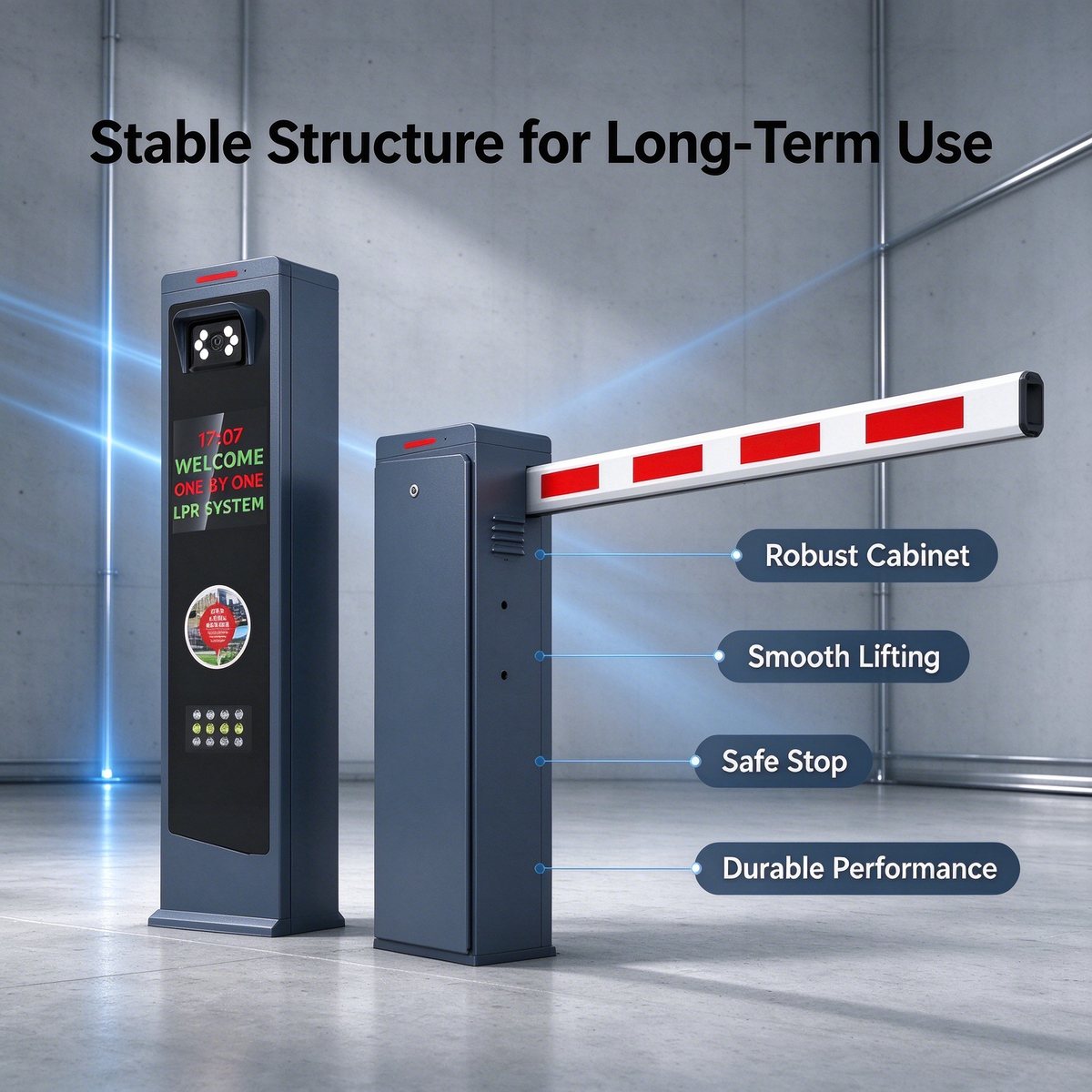
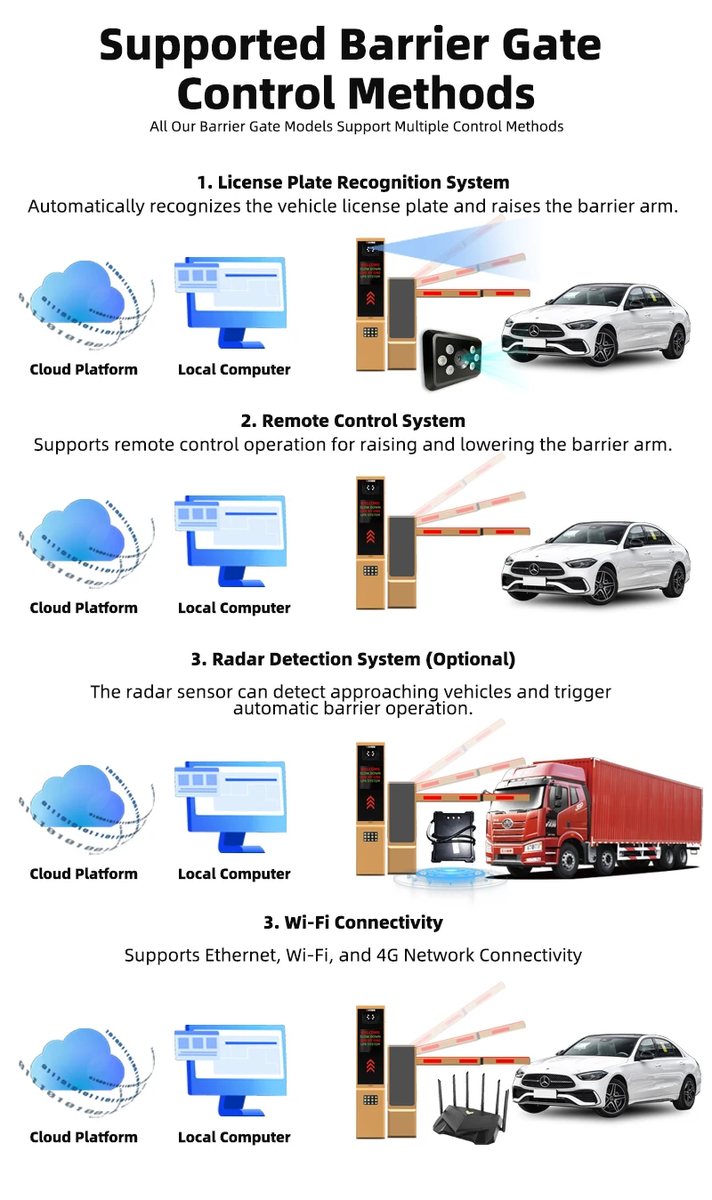
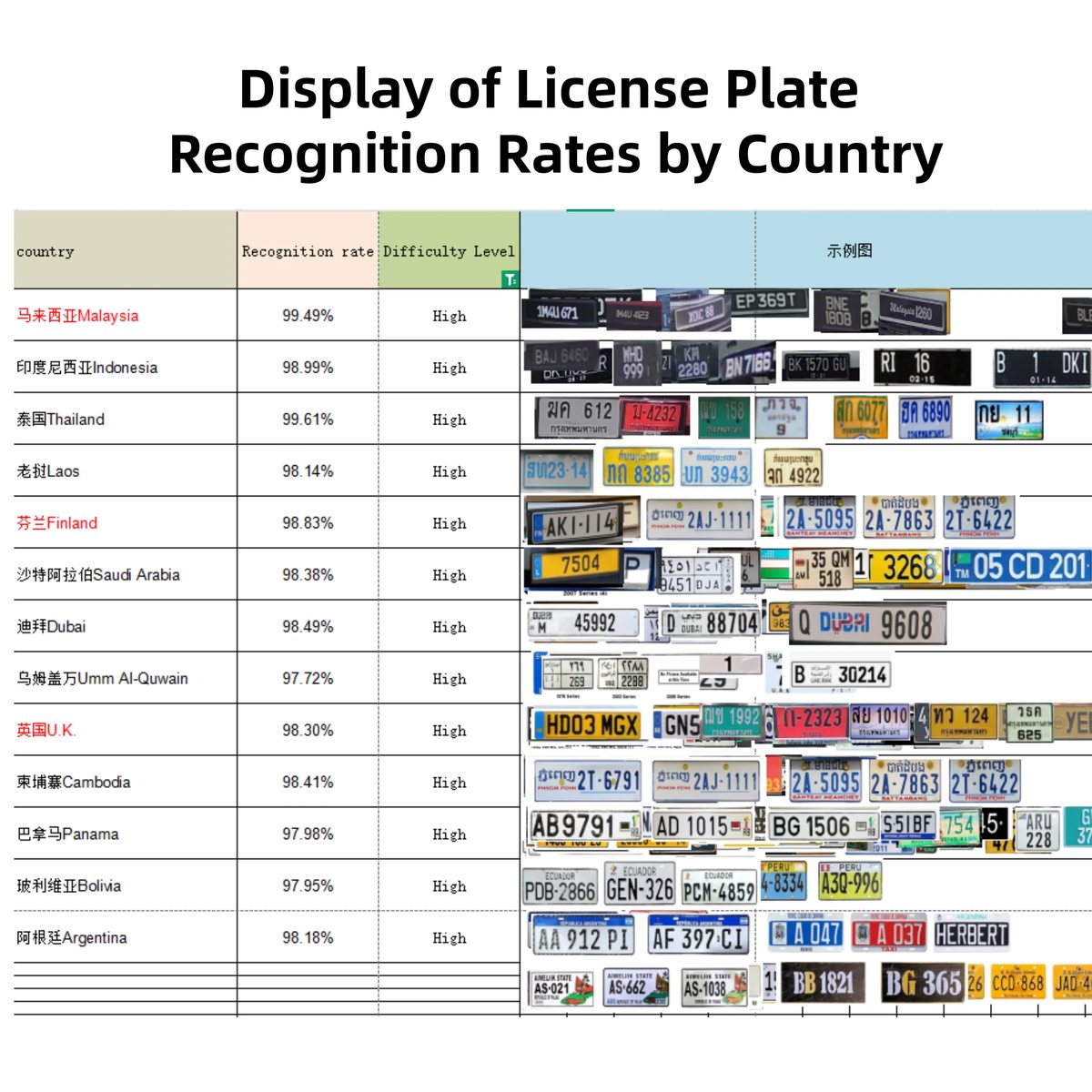
An LPR/ANPR license plate recognition system can capture the plate and compare it against a list of authorized vehicles. When the plate matches the configured rules, the system sends authorization to the barrier controller and can open the entrance without the driver having to roll down the window to show a credential. BAROXON offers entry and exit solutions with LPR cameras integrated with vehicle barriers.
To get good results, install the camera at a suitable angle, distance, and lighting level; configure the authorization lists and define what should happen if the plate is not recognized. It is advisable to have an alternative procedure for dirty, damaged, or covered plates, temporary vehicles, or network failures, so that one exception does not stop the entire lane.
At entrances with residents, employees, fleets, or regularly authorized vehicles, RFID/UHF can reduce the need to enter data manually. The reader identifies the card or tag and communicates authorization to the access control system. The reader location should let the driver use it comfortably and let the vehicle stop in a safe area without encroaching on the public road.
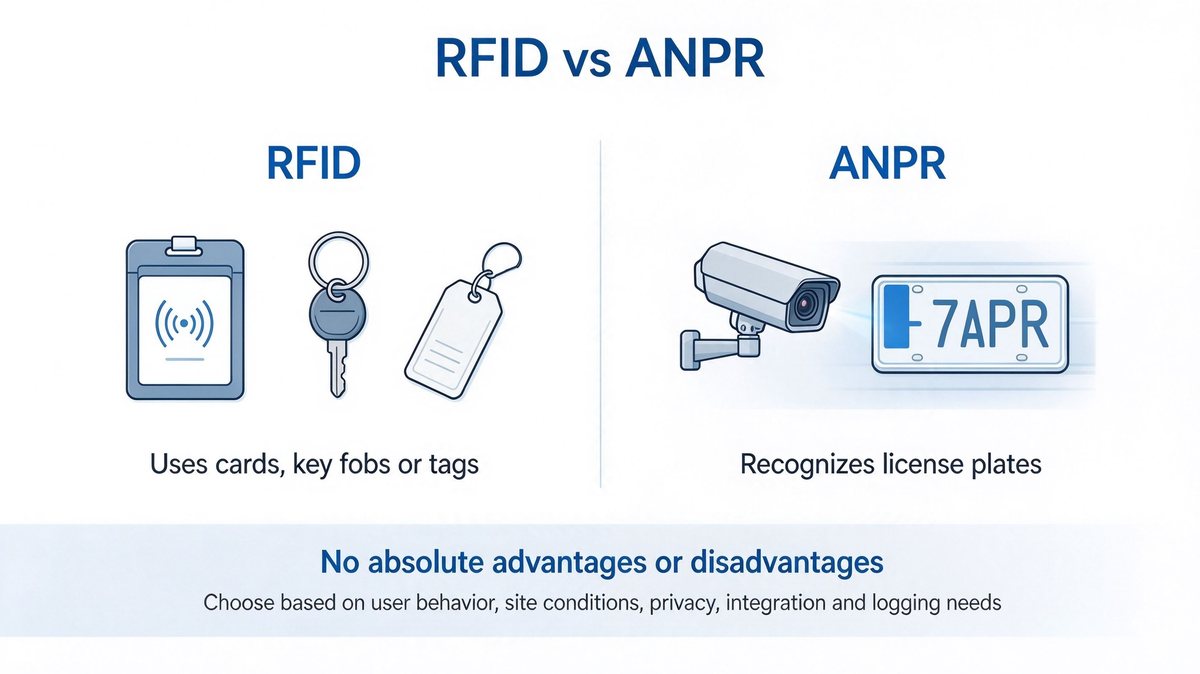
RFID and LPR are not necessarily mutually exclusive alternatives. A site can use LPR for visitors and plate validation, and RFID for regular users; the choice depends on the user type, security level, budget, and access policy. BAROXON has RFID barriers and options for integration with cameras, detectors, and third-party software, depending on the project configuration.
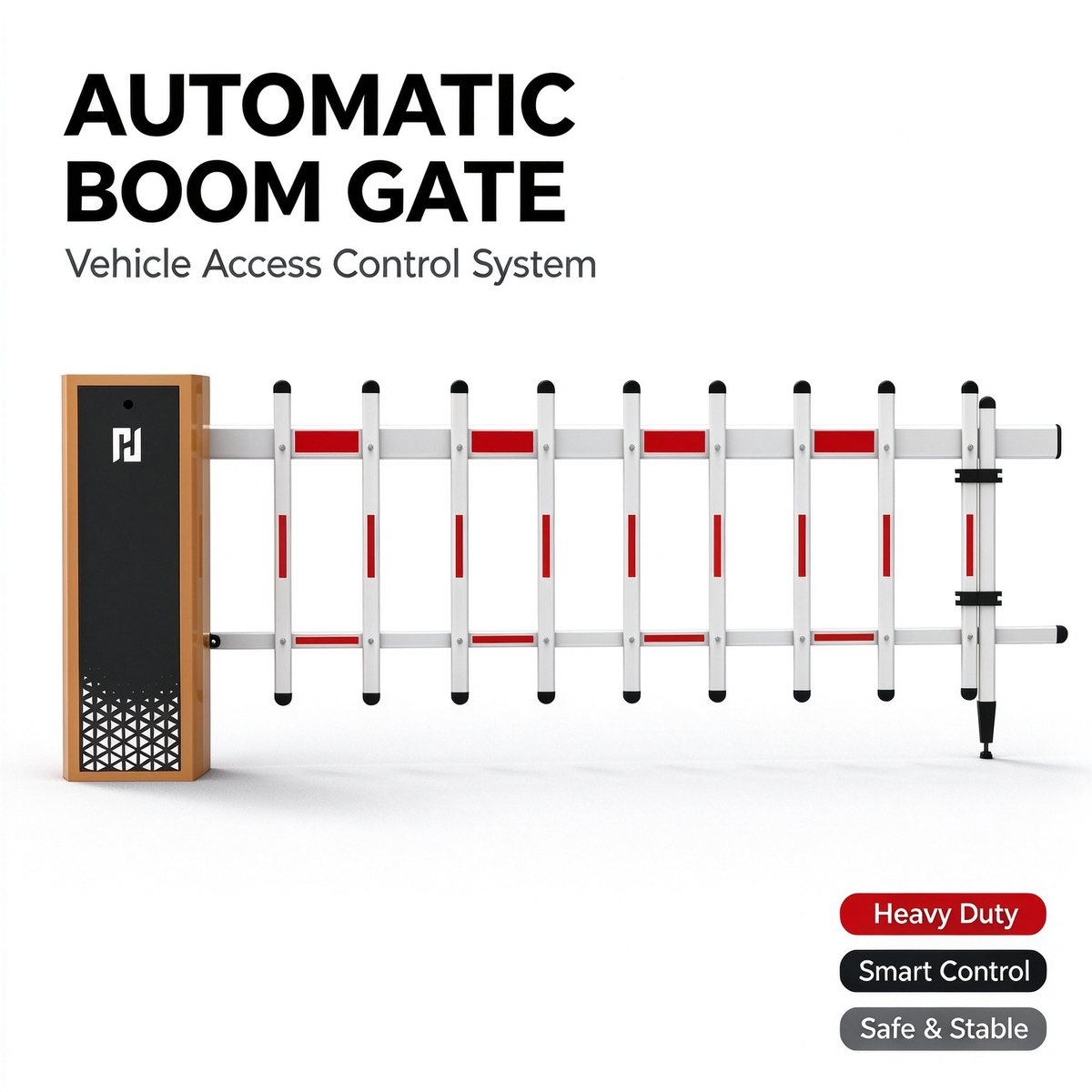
Arm length, barrier type, and duty cycle should match the lane width and frequency of use. BAROXON offers straight, folding, and grille-style arm options, with configurations that must be selected according to the available clearance, wind, and site conditions. At a high-demand entrance, request the opening and closing time for the exact model and verify whether that figure applies to the arm you need.
Do not select based only on the advertised speed. A longer or heavier arm may have a different motion profile; safety also requires the equipment to detect vehicles and obstacles appropriately. Compare the full system performance and confirm the configuration with the supplier before specifying a cycle time in the project.
Vehicle detectors, inductive loops where appropriate, and radar sensors can help detect the presence or movement of a vehicle. The control logic must prevent the barrier from lowering onto a vehicle that still occupies the passage area. A well-tuned installation reduces unnecessary openings, repeated maneuvers, and the need for staff to intervene manually.
Sensor location and calibration should follow the manufacturer's instructions and the lane design. Do not remove safety devices in an attempt to increase speed: any flow improvement must preserve reliable detection of vehicles, pedestrians, and relevant obstacles.
Leave enough space for a vehicle to wait without blocking outside traffic. Separate entry and exit lanes where feasible; mark in advance where to stop and where to read the plate or credential. Avoid placing readers, intercoms, or payment terminals so that the driver has to reverse or change lanes after starting the operation.
If there are visitors who need help, consider a separate service area or an incident procedure that does not stop the main queue. Also review nighttime visibility, signage, drainage, and pedestrian circulation. The goal is for authorized vehicles to move forward predictably without compromising safety.
When there are several lanes or sites, integration with a management system can centralize vehicle lists, permissions, entry and exit records, and demand reports. Before installing, confirm compatible interfaces, network requirements, data ownership, user permissions, and the procedure for operating if the server or connection becomes unavailable.
Ask for a system diagram showing camera or reader, controller, sensors, barrier, network, and software. Define who installs and configures each component, who tests the complete sequence, and who will handle incidents after commissioning. A well-coordinated integration prevents equipment from working in isolation and creating unexpected delays.
Unrecognized plates, expired credentials, unregistered visitors, and after-hours deliveries can become the main bottleneck. Define who authorizes each exception, how identity is verified, what data is recorded, and how the main lane is kept clear. Where possible, let staff resolve the incident from a separate station or through remote communication.
Do not sacrifice security controls just to clear a queue. Set clear rules for access lists, visitor logging, and manual opening, and periodically review whether the procedure still works during peak hours.
Compare post-installation measurements with the baseline: average access time, high-percentile time, maximum queue length, number of manual interventions, read errors, and downtime. Review the results by time slot and user type. If the average improves but long queues persist, identify whether they concentrate around payments, visitors, exits, or a single barrier.
Do not promise a percentage reduction in queues without comparable measurements. Results depend on demand, the number of lanes, equipment configuration, read quality, access policy, and site conditions. Set realistic targets and validate performance in real operation.
In a parking lot with residents and visitors, one possible strategy is to assign LPR to registered vehicles and a specific validation procedure for visitors. An RFID reader can serve recurring users if the operating model justifies it; presence sensors and the barrier are configured to keep movement safe. The exact solution should be defined after reviewing the layout, hourly demand, and safety requirements.
BAROXON publishes a logistics case in Mexico that combined vehicle barriers, RFID, loop detection, and ANPR; the site reports a 60% reduction in waiting time for that project. That result is a specific case, not a universal guarantee: every installation needs its own measurement and validation.
No. It can reduce the mechanical opening time, but identification, authorization, payment, lane design, and exception handling also affect total capacity. First identify the bottleneck, then select the equipment.
It depends on the user and the process. RFID is usually practical for recurring users with credentials; LPR validates plates without the driver presenting a card. Some projects combine both methods to serve different user groups.
Share the lane width, number of entrances, hourly flow, vehicle types, required arm length, authorization method, installation conditions, and existing systems. A drawing or photos of the entrance also help define the configuration.
Behavior depends on the architecture and configuration. Before installation, define whether local authorization is allowed, how the incident is logged, what manual access is permitted, and who makes the decision. Test this scenario during commissioning.
To reduce vehicle queues at a parking entrance, start by measuring the entire process. Then combine a barrier suited to the traffic volume with LPR/ANPR or RFID depending on the user type, correctly configured sensors, a well-designed lane, and an agile procedure for exceptions. The improvement should be verified with real data and without lowering safety requirements.