In short: Learn what a parking barrier is, how it works, its types, and how to choose an access boom for parking lots, businesses, and industrial sites in Mexico.
Summary: A parking barrier is a device that controls the passage of vehicles through a motorized arm installed at an entrance or exit. It can operate with a remote control, an RFID reader, a ticket system, a license plate recognition camera, or an access control system. The right selection depends on vehicle flow, lane width, available space, environmental conditions, and the level of integration required.
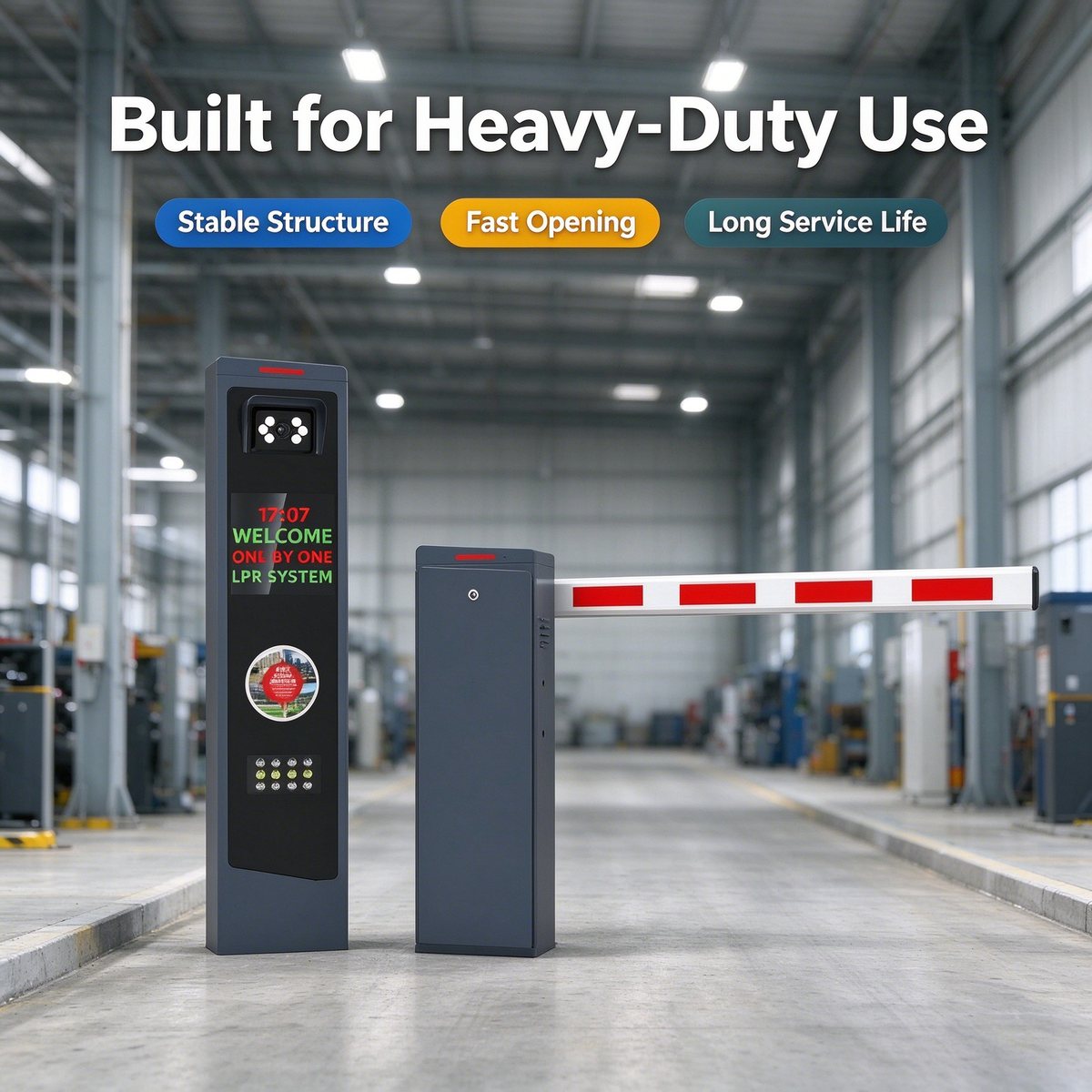
A parking barrier, also called an automatic vehicle barrier or access boom, is an electromechanical device that allows or blocks the passage of vehicles. It usually consists of a housing with a motor and drive mechanism, a barrier arm, a control board, and safety devices. When the system authorizes access, the arm rises; after the vehicle passes and the lane is confirmed clear, the arm lowers again according to the configured logic.
Unlike an entrance gate that physically blocks the entire opening, an access boom is designed to control a vehicle lane with repeated opening and closing cycles. It is used when it matters to organize flow, reduce unauthorized entries, and record vehicle movements without installing a full gate in every lane.
In Mexico, vehicle barriers can be used in commercial parking lots, corporate buildings, residential communities, manufacturing plants, logistics centers, hospitals, schools, and service entrances. For each project, the barrier should be selected together with the detection equipment and the authorization method, not only on the appearance or the price of the cabinet.
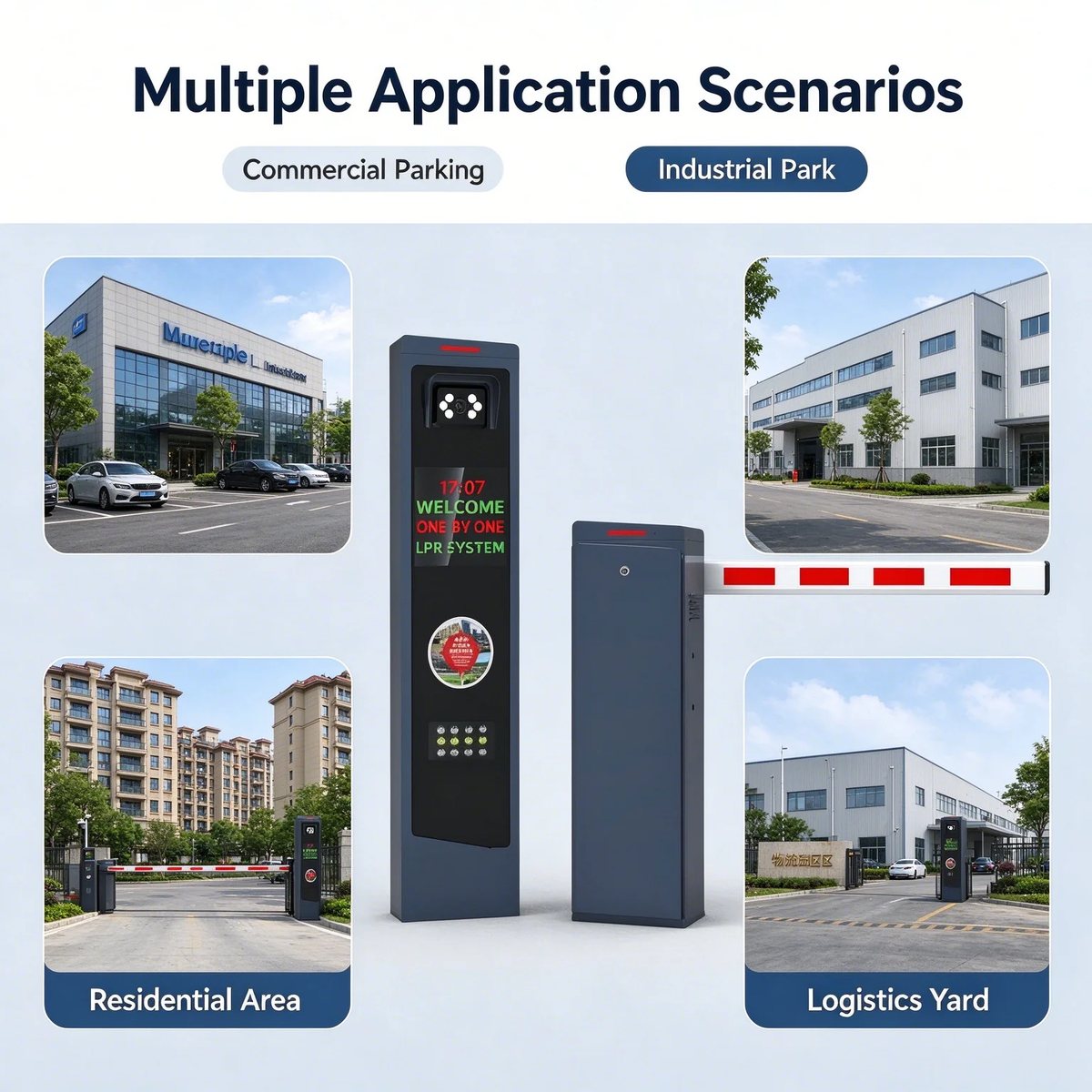
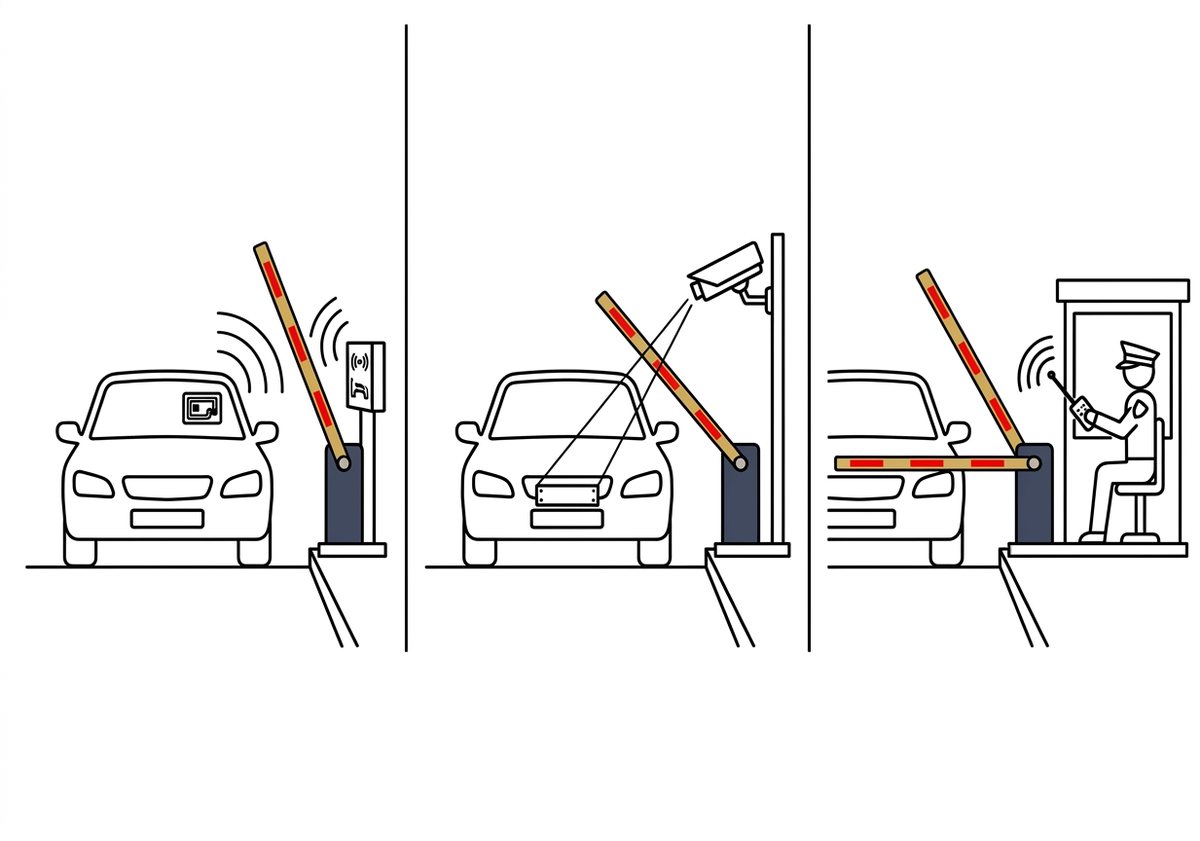
Basic operation follows a sequence of authorization, opening, passage detection, and closing. First, the system receives a valid command, for example from a remote control, an RFID card, a ticket, a QR code, or an ANPR/LPR camera. The controller checks the signal and activates the motor to raise the arm.
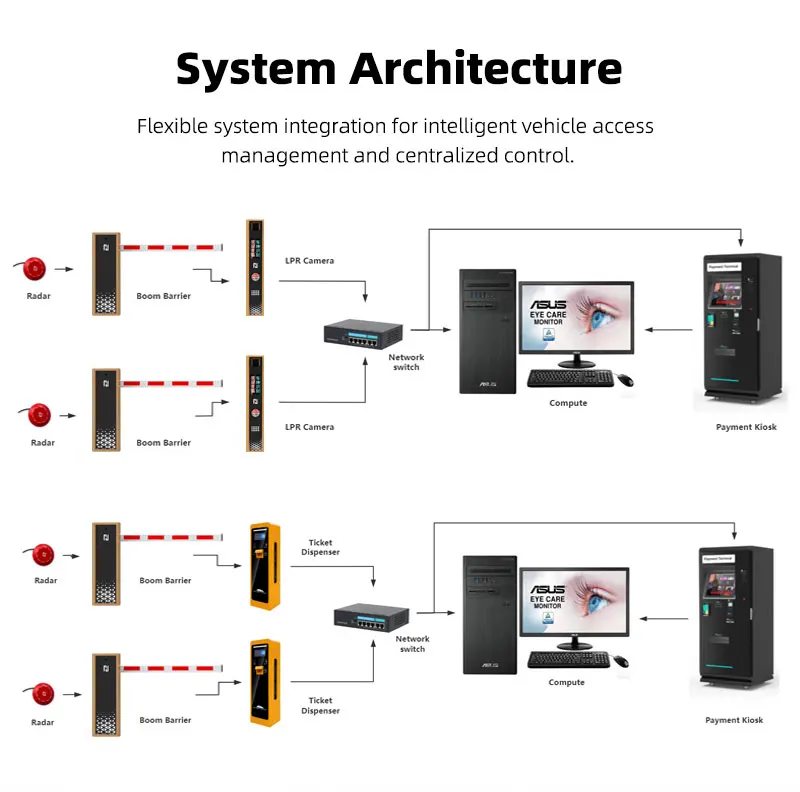
Next, an inductive loop detector, a radar sensor, or another compatible device can confirm the presence and movement of the vehicle. The safety logic must prevent the arm from lowering onto a vehicle that still occupies the passage area. The specific configuration depends on the controller, the sensors, and the safety standards applicable to the site.
Once the vehicle has passed and the area is clear, the controller starts closing according to the configured mode. A well-designed installation also considers manual release, behavior during a power failure, signage, maintenance, and how to free the lane during an emergency.
The straight-arm barrier is a common option for entrances with sufficient vertical clearance, such as open-air parking lots, office access points, and private facility lanes. Arm length must correspond to the effective lane width and the installation conditions. Operating speed, cycle frequency, and compatible detection devices should also be reviewed.
A folding-arm barrier can be useful when there are height restrictions, such as low ceilings, covered ramps, or access points inside buildings. The articulated arm folds during opening to adapt to the available space. Before choosing one, check the clear height, the geometry of the arm's path, and the manufacturer's mounting instructions.
High-speed barriers are intended for access points where waiting time and lane capacity are important factors. They may be considered in high-turnover parking lots, corporate facilities, and checkpoints with continuous flow. Rated speed alone does not guarantee a better result: arm length, traffic volume, authorization logic, sensors, and queue management also matter.
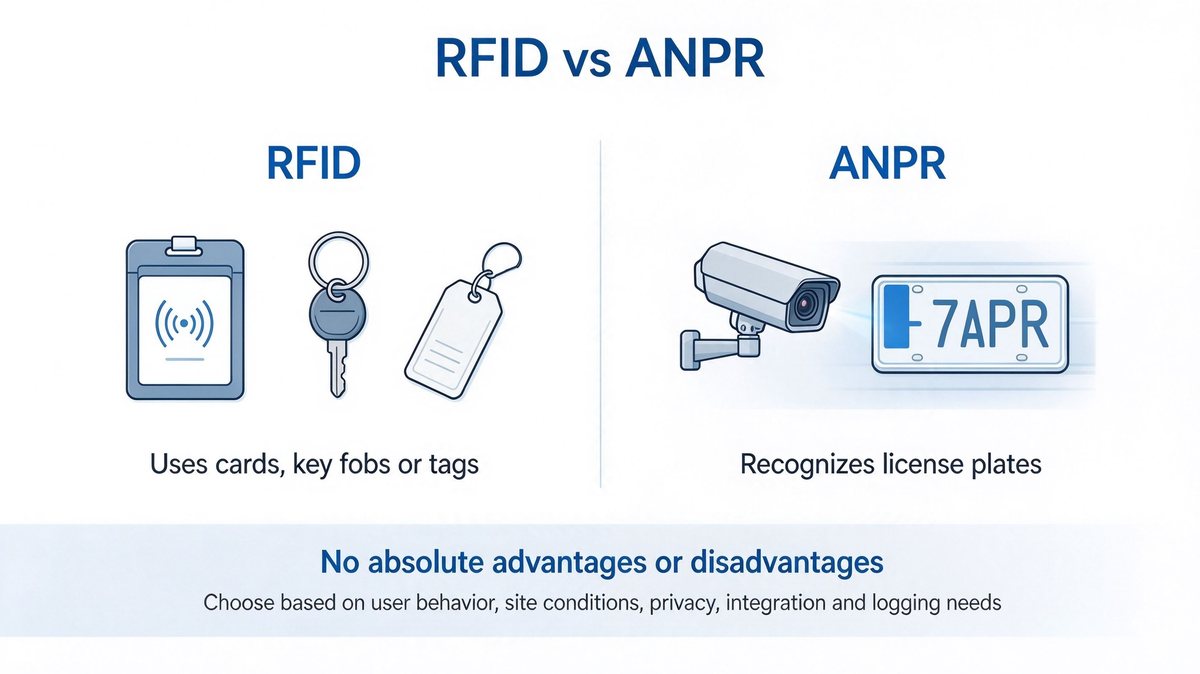
A barrier can be integrated with RFID/UHF readers to identify authorized credentials, or with ANPR/LPR cameras to recognize vehicle plates. Depending on the system, it can also receive authorizations from tickets, QR codes, or management software. Before buying, it is worth confirming compatibility among the barrier controller, the reading devices, and the existing management platform.
Radar sensors and loop detectors help detect vehicles and improve the operating logic of the lane. The choice depends on the environment, the mounting location, the vehicle type, and the required function. Sensors do not replace a risk assessment or a correct installation; they must be configured and tested as part of the complete system.
Record the lane width, the clear height, the space to install the cabinet, and the opening path of the arm. If there is a low ceiling, a ramp, or a nearby structure, compare a straight-arm solution with a folding-arm one.
Calculate how many vehicles pass during peak hours and how often the barrier opens and closes. An access point used occasionally does not have the same needs as the entrance to an industrial plant or a parking lot with continuous flow. Size the equipment according to real conditions and the manufacturer's technical data.
Decide whether the access point will work with a remote control, RFID/UHF, ticket, QR code, ANPR/LPR, or a combination of methods. For several user types, define the access rules in advance, the records that must be kept, and the procedure for visits or unrecognized vehicles.
Confirm the power available at the site. For Mexico, consult the version suitable for the local installation —including the 127 V / 60 Hz configuration where applicable— and verify the electrical specifications of the exact model. Also review exposure to rain, dust, heat, wind, and possible impacts.
Define how a vehicle will be detected inside the closing area and how dangerous maneuvers will be avoided. Check the interfaces available for readers, cameras, detectors, and third-party software. Ask the supplier for the connection diagram, the installation conditions, the maintenance instructions, and the manual operation procedure.
In addition to the equipment price, consider installation, civil works, sensors, the control system, spare parts, training, and maintenance. Equipment suited to the real flow and with available spare parts can help reduce interruptions and operating costs over its service life.
A standalone barrier can stop or allow passage, but an integrated system makes it possible to manage who can enter, under what conditions, and at what times. Integration with ANPR/LPR can automate plate identification; RFID can speed up access for authorized users; and sensors can provide information to manage vehicle presence. The final architecture must be validated with the hardware and software supplier.
For projects with several lanes or different user categories, document the authorization rules, manual operation permissions, handling of network failures, and the contingency procedure. Before commissioning, run tests for opening and closing, vehicle detection, emergency release, and integration with the management system.
The BAROXON Mexico site presents categories such as vehicle barriers and access booms, high-speed barriers, ANPR/LPR systems, automatic RFID barriers, radar sensors and vehicle detectors, as well as accessories and spare parts. The right combination depends on the application, the traffic volume, the authorization method, and the physical conditions of the access point.
For installations in Mexico, request written confirmation of the electrical configuration, arm length, operating time, available interfaces, mounting requirements, warranty, and spare parts availability for the quoted model. Do not assume that all functions are included in every version: ask for the datasheet and the scope of supply of the specific equipment.
In commercial usage in Mexico, both terms usually refer to the equipment that raises and lowers an arm to control the passage of vehicles. “Automatic vehicle barrier” is a broader technical expression, while “access boom” is a common way to describe the arm and the assembly installed at an entrance.
Yes, if the barrier, the controller, the ANPR/LPR camera, and the software are compatible. Before implementing the solution, confirm the communication method, the authorization rules, how failed reads are handled, and the alternative procedure for vehicles that cannot be identified.
It depends on the number of vehicles per hour, the arm length, the required opening time, the available space, and the safety system. A high-speed barrier may be an option for certain intensive access points, but the selection must be based on the project data and the manufacturer's specifications.
Confirm the voltage, frequency, available current, grounding, and the specifications of the exact model. For Mexican installations, ask about the 127 V / 60 Hz configuration when applicable; do not replace the datasheet review with an assumption based only on the country.
Follow the model manual and the installer's maintenance plan. Inspections normally include the arm and its fastenings, the drive mechanism, the safety elements, the wiring, the housing, and the opening and closing functions. Any adjustment must be performed with safe procedures and by trained personnel.
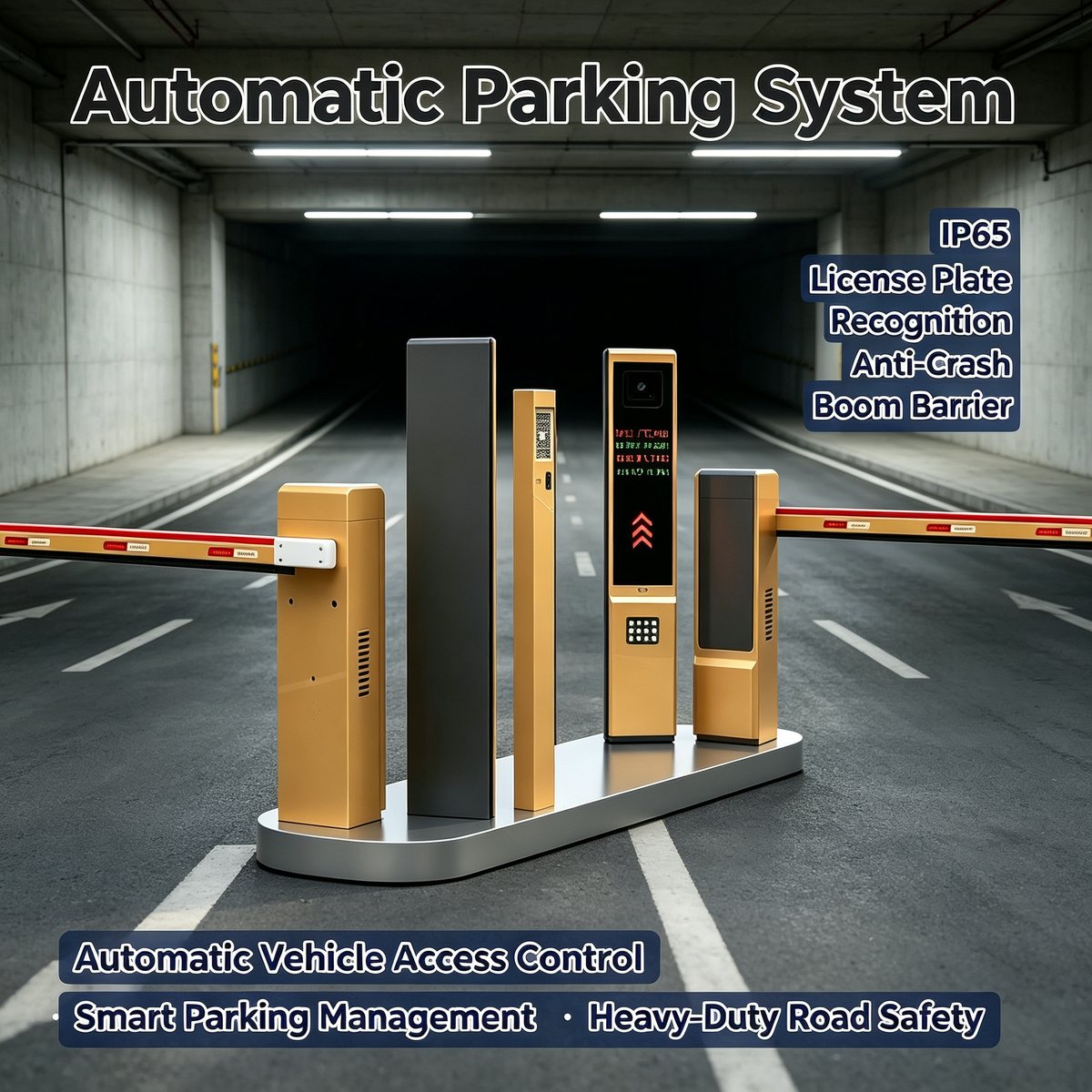
A well-selected parking barrier helps organize vehicle access, control authorizations, and improve the operation of parking lots, buildings, and industrial sites. To choose correctly, evaluate the space, traffic, arm type, safety detection, authorization method, power supply, and integration with the management system. In Mexico, it is also worth confirming the local electrical configuration, Spanish-language support, and spare parts availability before closing the purchase.


