In short: Learn how to choose the best vehicle barrier for a small parking lot in Mexico: straight or folding arm, RFID, LPR, safety sensors, space, and budget.
Reference title in English: What Is the Best Parking Barrier for a Small Car Park?
The best vehicle barrier for a small parking lot is the one that matches the actual width of the entrance, the number of vehicles per hour, the space available for the arm to rise, and the authorization method the property needs. For many office, retail, clinic, and condominium parking lots with a single lane, an automatic straight-arm barrier can be a simple solution; when the ceiling or structure limits the opening height, a folding arm is worth evaluating. If the goal is to reserve a single parking space, a smart space lock may be more suitable than a barrier for the entire entrance.
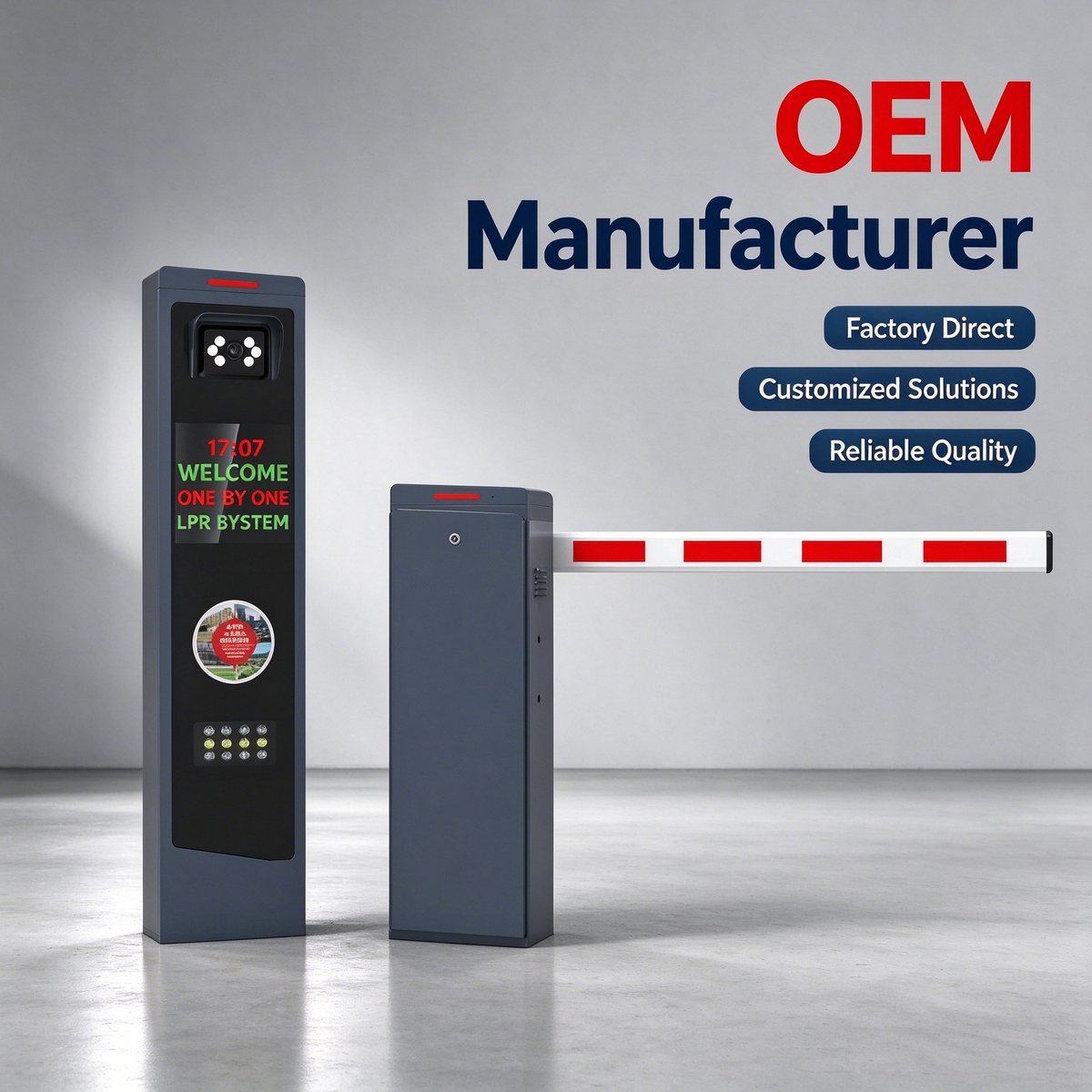
As a starting point, compare these options and confirm the exact configuration with the supplier before purchasing. There is no single ideal model for every small parking lot: space, vehicle flow, and the way access is controlled all change the recommendation.
| Site requirement | Option worth evaluating | Reason |
|---|---|---|
| One lane with low or moderate traffic | Automatic straight-arm barrier | Simple design and clear lane control |
| Limited clear height | Folding-arm barrier | The articulated arm can adapt to certain overhead restrictions |
| Recurring residents or employees | Barrier compatible with RFID/UHF | Convenient access through authorized credentials |
| Plate logging and card-free access | System integrated with ANPR/LPR | Can identify plates and apply configured access rules |
| A single reserved space | Smart space lock | Controls one individual space, not the entire entrance |
Measure the usable width of the lane, the distance between the barrier housing and the opposite edge, the turning radius of vehicles, and any nearby obstacles such as walls, columns, gates, light poles, or booths. The arm must cover the required opening without striking structures or encroaching on a pedestrian path. At narrow entrances, also check whether a vehicle can stop before the arm without blocking the sidewalk, the street, or internal circulation.
Do not select the arm based on its nominal length alone. Ask the supplier to confirm the appropriate length for the lane width and the model configuration. BAROXON offers straight, folding, and grille-style arms in different configurations; final compatibility depends on the operator, the arm selected, and the installation conditions.
A straight arm is usually the first option worth evaluating for a conventional entrance with sufficient clear height. Its geometry is easy for drivers to understand and it can work well in small office, retail, clinic, or residential parking lots. Even so, you should check the arm length, the housing location, pedestrian traffic, and the presence of tall vehicles.
A folding arm can be a good fit when a slab, canopy, low ceiling, or structural element prevents a straight arm from rising vertically. Before specifying one, confirm the clear height, the articulation path, and the dimensions stated by the manufacturer. A folding arm does not remove the need to measure: the geometry must suit the actual space and must not interfere with vehicles or pedestrians.
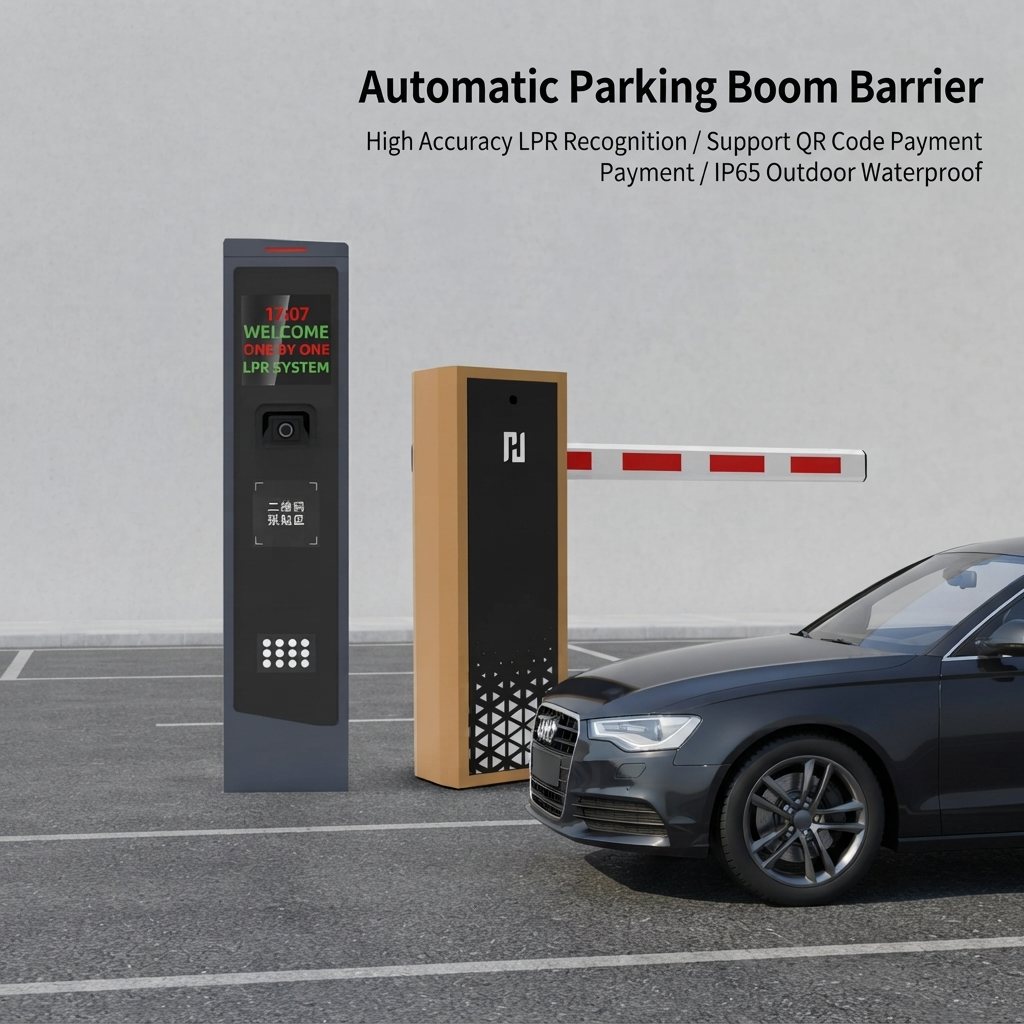
In a private parking lot with few movements per day, remote control or operation by authorized staff may be enough. However, define how visits, lost remotes, deliveries, and after-hours entries will be handled. If staff are not always on site, it is worth analyzing an automatic option that reduces reliance on manual operation.
If the same residents, employees, or tenants come and go often, a barrier compatible with RFID/UHF can speed up authorization. The reader recognizes an authorized credential and the controller executes the configured rule. To keep the system secure, establish a process for issuing and revoking credentials, canceling lost ones, and managing temporary visitors.
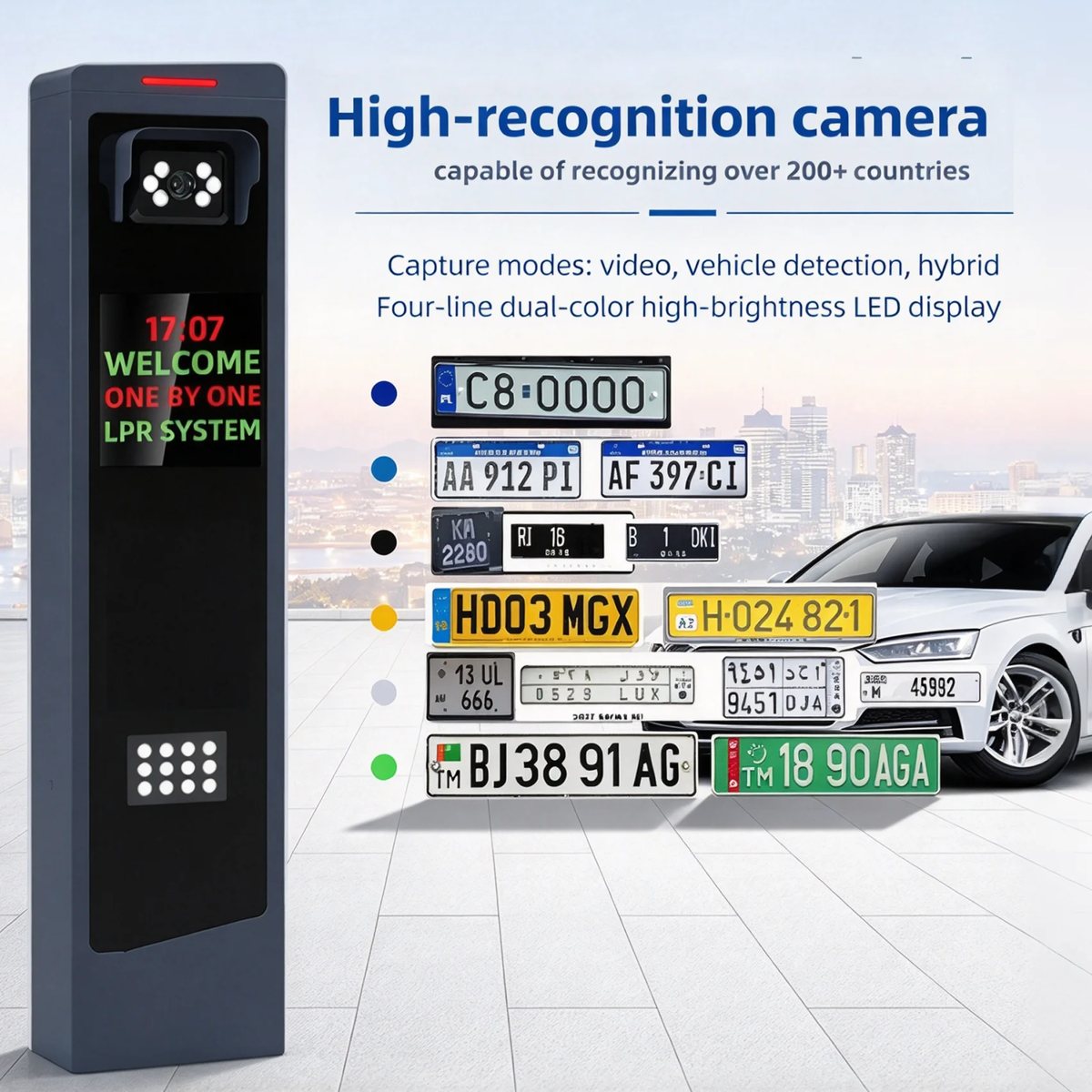
Automatic license plate recognition can be useful if you need to log entries and exits, manage lists of authorized vehicles, or reduce the use of cards. Its performance depends on camera position, lighting, plate angle, approach speed, image clarity, and software configuration. Before buying, request a test with vehicles and lighting conditions similar to those at the site.

Even in a small parking lot, the barrier must be installed as part of a safe access system. Evaluate radar sensors, loop vehicle detectors, photocells, warning lights, and the protection functions supported by the selected model. The right combination depends on lane geometry, vehicle types, the presence of motorcycles and pedestrians, and the manufacturer's installation instructions.
Do not assume that every sensor is included with any barrier. Confirm which components are included, which are optional, and how they connect to the controller. After installation, the integrator should test opening and closing behavior in real scenarios, document the settings, and explain the manual release procedure in the event of a failure or power outage.
A parking lot with 15 spaces can have very different demand depending on its use: an office with staggered schedules does not operate like a clinic with concentrated arrivals or a retail site with constant turnover. Estimate peak-hour movements, the time each user takes to be authorized, and the length available to form a queue without spilling into the public road. If the queue can block the street, consider a faster authorization method and an entry and exit strategy.
A high-speed barrier is not always the most cost-effective purchase for a small site. Compare total cost against the real volume of cycles, the maximum acceptable wait, and safety requirements. The advertised opening speed must be verified for the specific arm length and configuration; do not compare figures from different models as if they were equivalent.
For Mexico, confirm that the electrical configuration is compatible with the site's installation; BAROXON lists 127 V/60 Hz power options and a wide-range input in certain configurations. The datasheet for the selected model must take precedence: verify voltage, consumption, environmental protection, operating temperature, and any grounding or electrical protection requirements with the installer.
Ask about the maintenance plan, spare parts availability, warranty, remote support, and the manual in Spanish. In a small parking lot, a failure can affect the entire entrance; that is why ease of diagnosis and the availability of replacement components can matter as much as the initial price. If the entrance must remain operational during power outages, ask whether the model supports a backup battery or UPS and how manual release is performed.
When you request a quote, compare the housing and arm, the controller, the sensors, the RFID reader or LPR camera, wiring, civil works, installation, commissioning, training, and maintenance. A quote with a lower initial price may require additional accessories; a more complete one may reduce manual tasks, but only if the included features are truly needed. Ask for the quote to break down components and options so you can compare equivalent proposals.
To prepare a useful quote, share the lane width, a photo of the entrance, the clear height, the approximate number of vehicles per day, the desired authorization method, and the electrical conditions. BAROXON offers vehicle barriers, RFID options, ANPR/LPR systems, and sensors; the supplier can recommend a configuration after reviewing this information.
For a small parking lot with one lane and sufficient clear height, start by evaluating an automatic straight-arm barrier with the appropriate safety sensors. If there is a height restriction, compare a folding-arm option. If most users are recurring, consider RFID/UHF; if you need automatic plate-based logging, look at an ANPR/LPR solution. To protect only one reserved space, compare a smart parking space lock. The final choice should be based on site measurements, expected traffic, included features, and confirmed model compatibility.
At many single-lane entrances, an automatic straight-arm barrier is a good starting point if there is enough clear height. The selection should be confirmed against lane width, traffic, and safety requirements.
When a ceiling, canopy, or structure limits the vertical travel of a straight arm. Verify the full arm path and the model dimensions before buying.
No. An LPR camera is useful when vehicles must be authorized or logged by plate. For frequent users, an RFID reader may be sufficient; the decision depends on operations and access policies.
Ask the supplier for a proposal based on the lane design and the risks present. Ask about radar, loop detectors, photocells, and warning lights, and confirm which functions the specific model supports. Installation and testing should be carried out by qualified technicians.
The BAROXON site lists configuration options for 127 V/60 Hz. Confirm the electrical datasheet, consumption, and installation requirements of the quoted model before issuing the purchase order.
Are you about to install a vehicle barrier in a small parking lot? Contact BAROXON México and share the entrance width, the clear height, the estimated vehicle flow, and the authorization method you need. With that information, you can request a technical recommendation and a quote tailored to the project.


