In short: Learn how to choose a vehicle barrier for underground parking by clear height, maneuvering space, vehicle flow, safety, and RFID or plate recognition.
Choosing a vehicle barrier for an underground parking facility requires considering more than price or opening speed. At a covered access point, clear height, ramp slope, maneuvering space, lighting, ventilation, pedestrian circulation, and vehicle volume can all affect the selection and the installation. The barrier must integrate with the access design without obstructing passage or creating conflict points between cars and pedestrians.
For projects in Mexico, it is advisable to confirm the real dimensions of the site, the available power supply, the environmental conditions, and the access control method from the outset. A solution that is suitable for an outdoor booth is not necessarily the best choice for a narrow ramp or an entrance with a low ceiling.
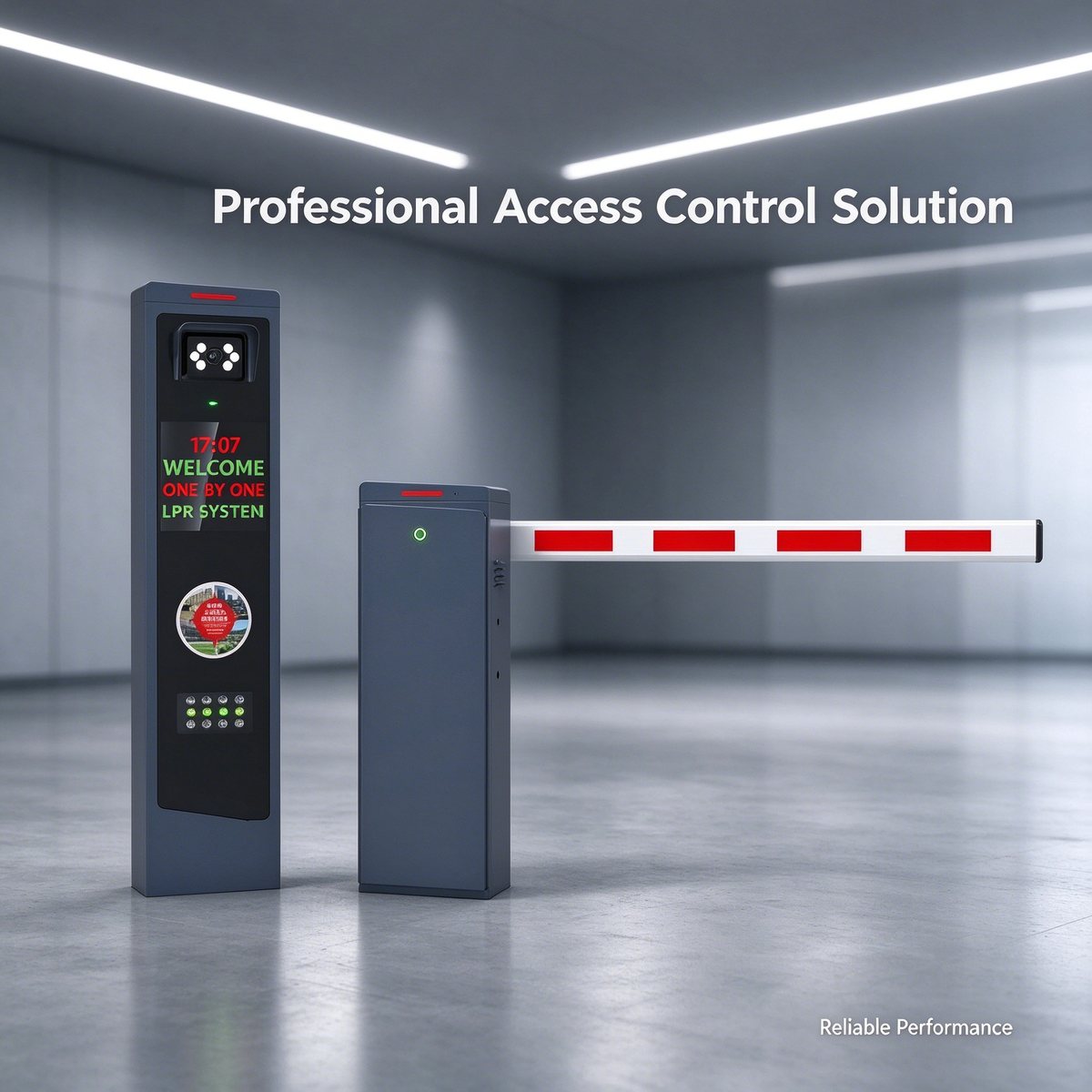
Before selecting the arm, measure the clear height from the finished floor to the lowest element of the ceiling, pipes, ducts, signs, or light fixtures. Also review the lateral space needed by the barrier housing and the travel of the arm during opening and closing. Dimensions must be measured at the exact location where the equipment will be installed.
In parking structures with a low ceiling, a folding arm may be an option when the model supports it and the geometry of the site requires it. However, it should not be chosen automatically: confirm the height it reaches when open, the compatible length, and the safety clearances indicated by the manufacturer.
At an underground entrance, the vehicle may arrive from a slope or a tight curve. Check that the driver can stop in front of the reader or camera without encroaching on the ramp, blocking traffic, or ending up in a position with insufficient visibility. The boom should be located where the car can stop and proceed in a controlled manner.
Calculate the available length for the waiting queue. If access control takes too long or the lane allows only one vehicle to stop, queues may form that extend into the street or onto the ramp. Consider peak-hour flow and how visitors will receive authorization to enter.
A straight arm is usually a straightforward alternative when sufficient clear height exists and the lane has a direct geometry. A folding arm can help at access points with height restrictions, provided the selected version is designed for that configuration. A grille-type arm can serve certain access control designs, but it requires evaluating space, visibility, and wind exposure.
The arm length must correspond to the usable width of the lane and to the model specifications. Do not assume that any barrier supports any arm. Request confirmation of compatibility, required supports, installation restrictions, and operating conditions.
Traffic at a residential parking facility can be very different from that at a shopping center, a hospital, a corporate building, or a public parking lot. Estimate the number of entries per hour and the expected opening and closing cycles. Then compare that profile with the duty cycle stated for the specific model.
Do not select a barrier solely on advertised speed. Operating time must be evaluated together with arm length, frequency of use, the authorization system, and the capacity of the waiting queue. A fast opening will not by itself solve a slow validation process or poor lane layout.
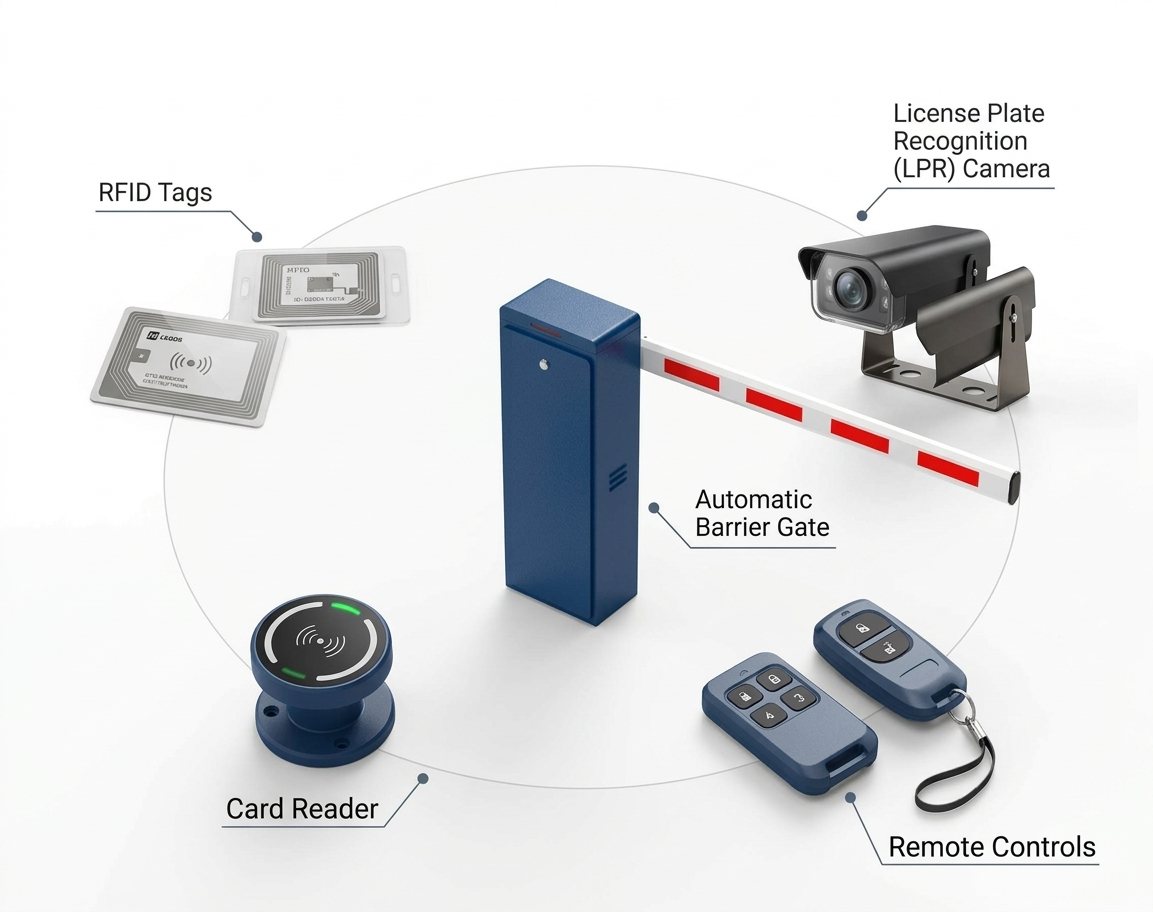
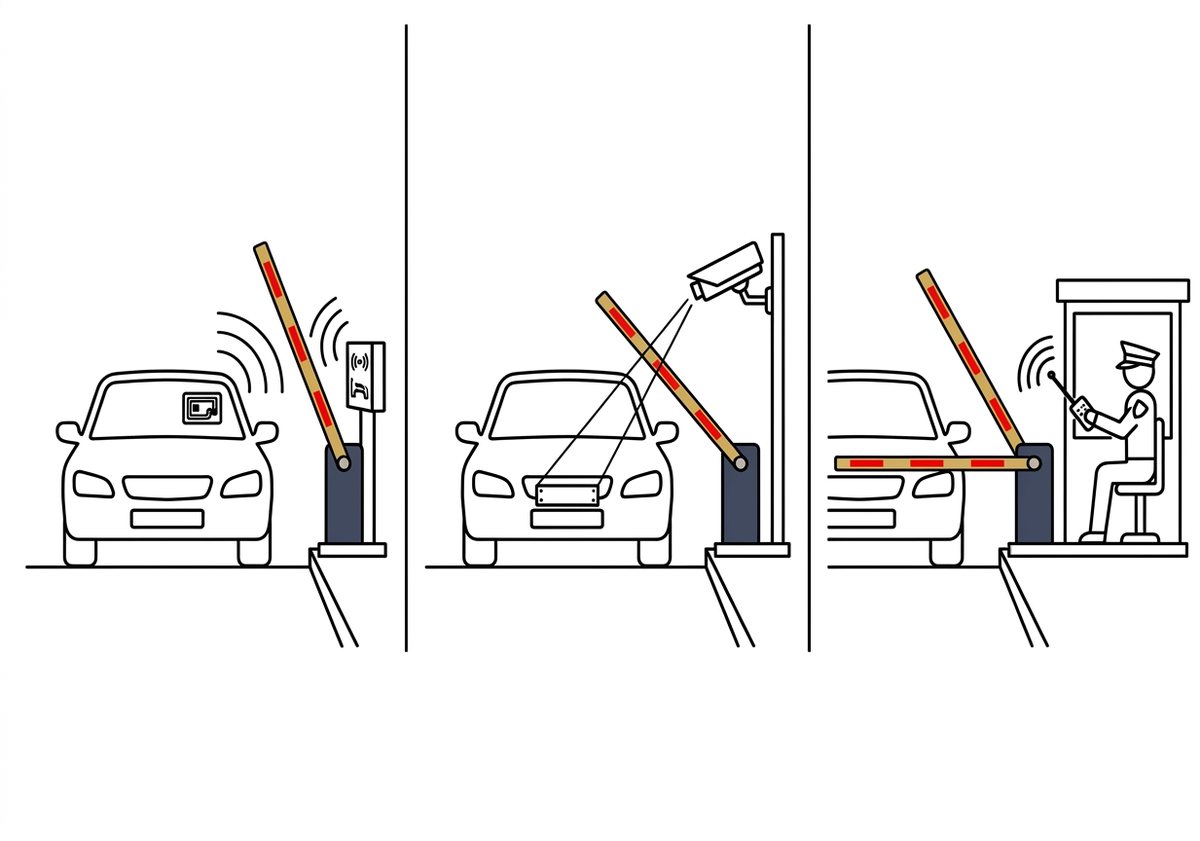
An underground parking facility may use remote controls, RFID/UHF cards or tags, QR codes, tickets, or automatic ANPR/LPR license plate recognition, depending on the operation and the compatible equipment. For residents and employees, a registered credential can facilitate recurring access; for visitors, a temporary code or a registration flow at reception may be useful.
If license plate recognition is used, review the camera location, the capture angle, the lighting, and the reading distance. On an underground ramp, shadows, reflections, headlights, and the transition between outdoor and indoor light can affect the read. Test under the actual conditions of the access point before putting the system into operation.
Confirm compatibility between the barrier, the reader or camera, the controller, and the management software. Request a comprehensive test that includes identification, permission validation, opening, vehicle detection, closing, and event logging, where applicable.
The entrance of an underground parking facility can combine cars, motorcycles, pedestrians, and operating personnel in a reduced space. Evaluate the position of the housing, the movement zone of the arm, driver visibility, and pedestrian routes. Where necessary, use signage, physical barriers, or a separate pedestrian route to reduce conflicts.
Depending on the design and the model, induction loops, radar sensors, photocells, or other compatible devices may be used to detect vehicles or obstacles. Confirm which are included and which must be purchased separately. The selection, installation, and testing of sensors must follow the manufacturer's instructions and the site risk assessment.
Before opening the parking facility to the public, test the opening and closing cycle, vehicle detection, response to anomalous signals, and the manual operation procedure. Train the personnel and document how to stop access and request assistance safely.
Verify the voltage, frequency, consumption, and protections required by the exact model. For a project in Mexico, ask about the 127 V / 60 Hz configuration and request the datasheet for the unit that will be supplied. Do not assume that all models or versions share the same power supply.
Even if the equipment is indoors, review humidity, dust, ventilation, the risk of leaks, and cleaning conditions. Sensors, readers, and cameras also need a suitable location and periodic maintenance. Ask for the environmental conditions permitted for each component and avoid installing equipment where it may be struck or exposed to standing water.
The electrical installation, grounding, and control wiring must be reviewed by qualified personnel. If electrical backup, a battery, or a UPS is required, confirm its compatibility and whether it is included in the proposal.
Make sure technical personnel can reach the housing and the components without completely blocking circulation in the parking facility. Leave space for inspection, opening service doors, and replacing parts. In facilities with continuous operation, define maintenance windows and procedures to temporarily divert traffic.
Ask about the warranty, the available spare parts, the recommended maintenance intervals, and technical support. The total cost includes not only the purchase but also installation, accessories, maintenance, repairs, and possible downtime.
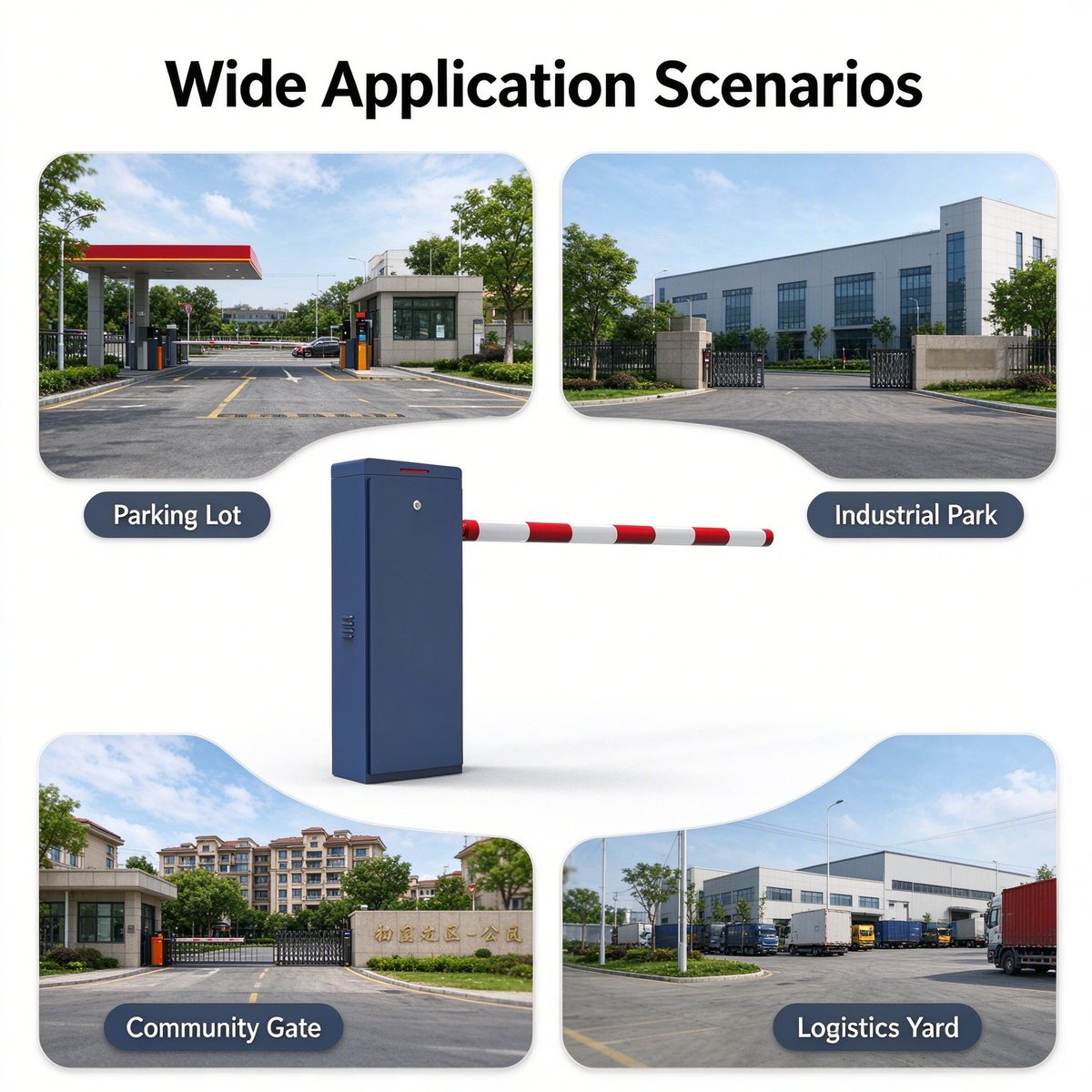
BAROXON Mexico presents categories for vehicle barriers, high-speed barriers, automatic RFID barriers, ANPR/LPR systems, radar sensors, and vehicle detectors, as well as accessories and spare parts. These categories can serve as a starting point for designing an automated access point, but the selection must be based on the dimensions of the basement, the vehicle flow, and the compatibility between components.
When requesting a quotation, share the clear height, the lane width, the ramp slope, the waiting space, the vehicle volume, the authorization method, the lighting, and the available power supply. Ask that the proposal specify the model, the arm type and length, the sensors, the interfaces, the accessories, and the installation or commissioning services.
It depends on the clear height, the geometry of the ramp, and the model specifications. A straight arm can work when there is sufficient vertical space; a folding arm can help at certain low access points if it is approved for the selected barrier. Always confirm dimensions and compatibility before buying.
It should be placed where the vehicle can stop safely and the device can read the credential or plate under real conditions. Consider the angle, the lighting, the distance, the slope, and the space available for the queue. The final location must be validated during an on-site test.
Not necessarily. The configuration varies by model and by the supply package. Request a list of the sensors included, the optional accessories, and the safety tests the installer will perform.
Yes, when the barrier, the controller, the readers or cameras, and the software are compatible. Confirm the interfaces and request a complete test before putting the system into service.
Check the mounting of the housing, the alignment and travel of the arm, the operation of the sensors, opening and closing, pedestrian access, the operation of the authorization system, and the emergency procedures. Record the results and train the operators.
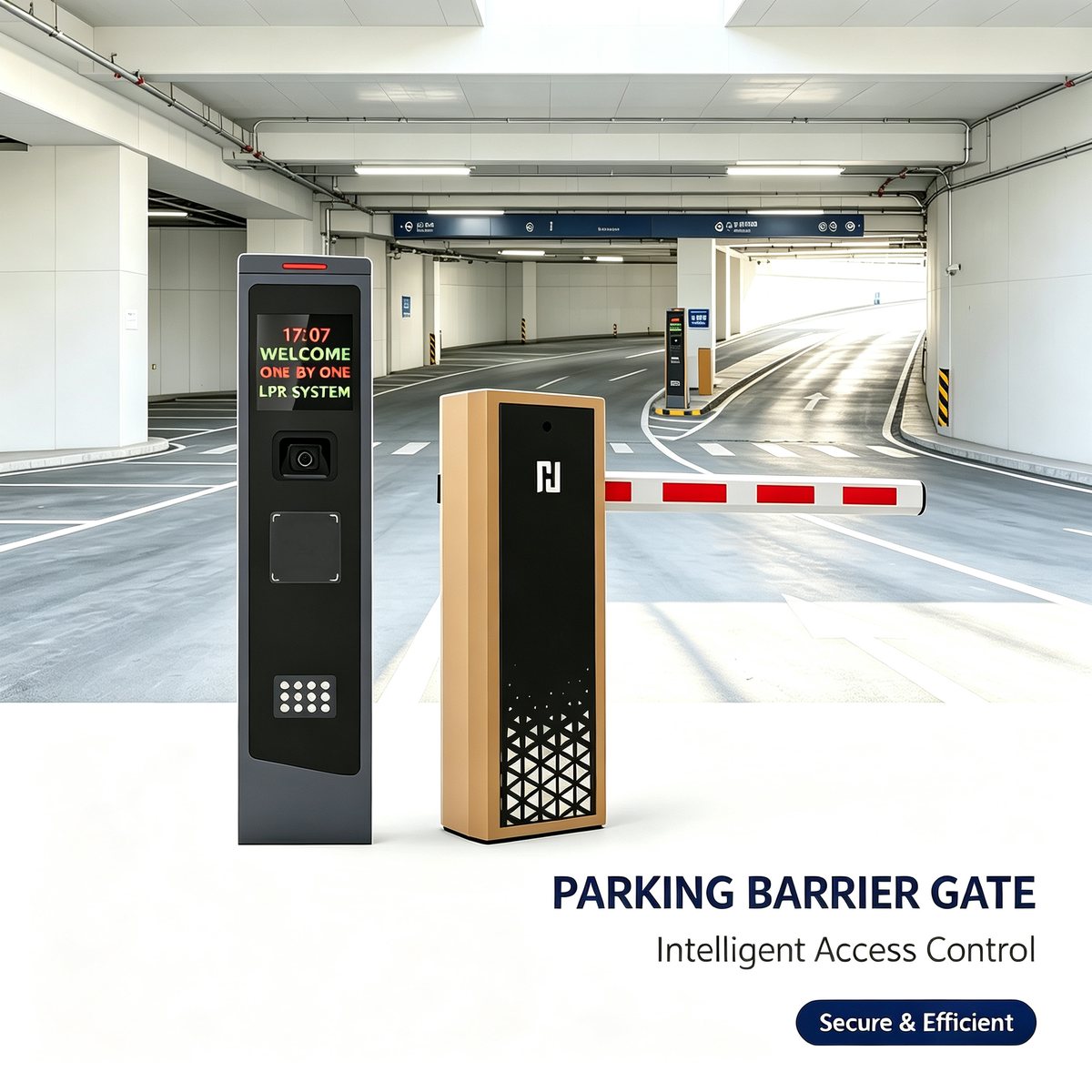
The right barrier for an underground parking facility must adapt to the clear height, the ramp, the vehicle flow, safety, and the authorization method. Measuring the access point before quoting, confirming component compatibility, and testing the system on site help avoid installation and operating problems. The datasheet for the selected model should be the final reference for dimensions and performance.


