In short: Learn how to choose a heavy-duty vehicle barrier based on traffic, arm length, motor, wind, safety, and integration with RFID or license plate recognition.
A heavy-duty vehicle barrier is designed to control vehicle access at facilities where the arm may operate frequently, traffic volume is high, or working conditions demand robust construction. It may be suitable for logistics centers, manufacturing plants, commercial parking lots, corporate entrances, and other sites with intensive operation. However, "heavy duty" should not be interpreted as a universal specification: before buying, review the model datasheet and compare it with the conditions of the site.
In Mexico, a correct selection must consider lane width, cycles per hour, vehicle type, available space, weather exposure, power supply, and the access control system. Choosing solely by price, appearance, or advertised speed can lead to operational failures, unnecessary maintenance, or an incomplete integration.
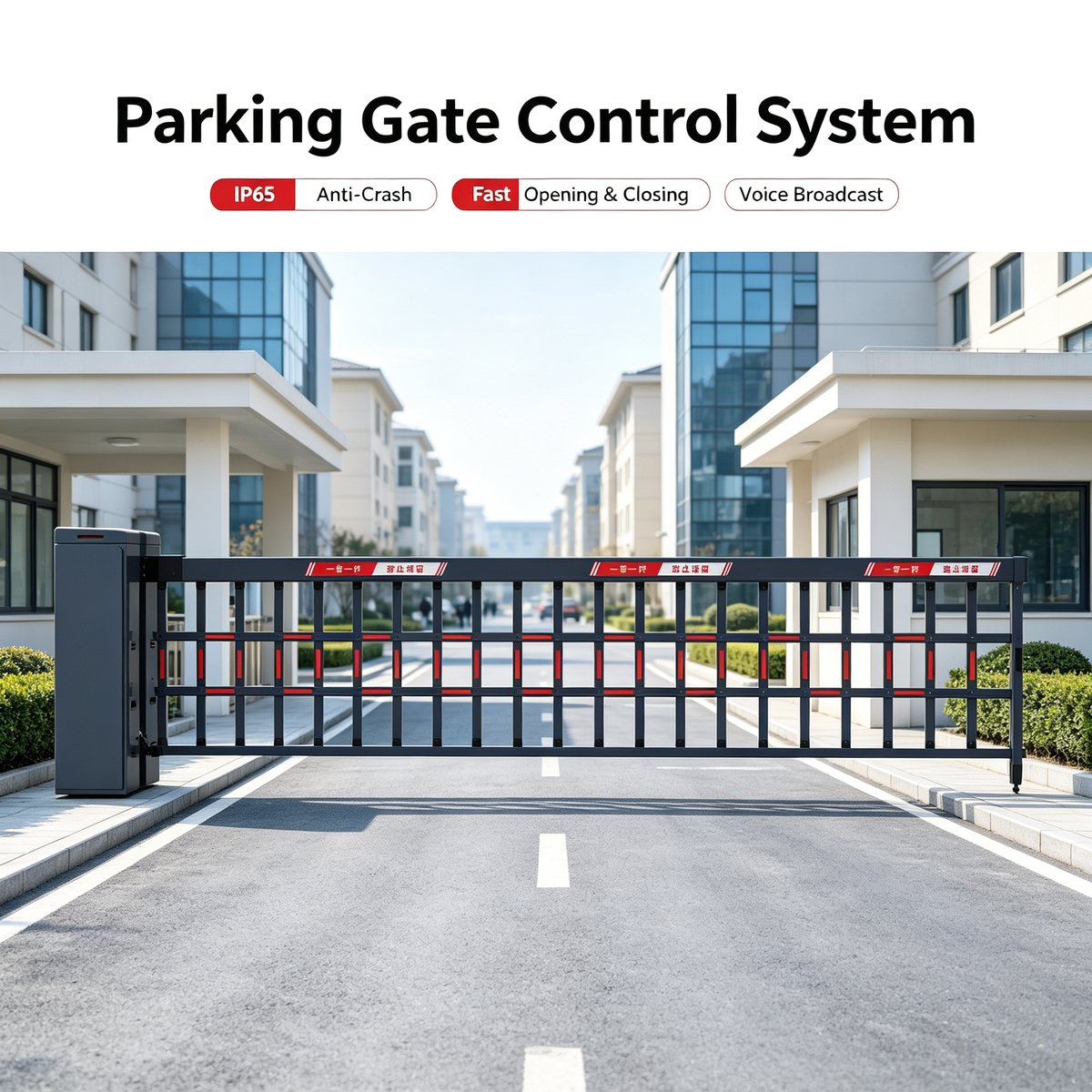
Before comparing models, calculate how many vehicles pass through the access point in a normal hour and during the peak hour. Also estimate how many openings and closings the barrier may perform during the day, how long it must operate, and whether there will be rest periods. A small office entrance does not have the same demands as a logistics booth, a production plant, or a toll lane.
Ask about the model's usage classification, its cycle capacity, and the conditions under which the published data was measured. If the manufacturer states a life-cycle or continuous-operation figure, request the report or datasheet explaining the test method. Laboratory results do not replace an evaluation of the actual installation conditions.
The arm length must cover the usable width of the lane without interfering with posts, ceilings, signage, electrical installations, or pedestrian routes. BAROXON offers straight, folding, and grille-type arm configurations in different lengths depending on the product line. Confirm the availability of the exact type and size for the model you are going to quote.
A straight arm may be appropriate when sufficient clear height exists. A folding arm can help at access points with height restrictions, such as some covered parking structures, provided the configuration is compatible with the equipment. Grille-type arms can be useful in certain access control designs, but their wind-exposed area must be considered in the installation calculation.
Do not choose the longest arm without reviewing the mechanical load and wind. Ask the supplier to confirm the permitted length, the compatible arm type, the required supports, and the installation limitations for the specific model.
At high-use access points, the motor, the drive, the balancing mechanism, and the housing structure influence operating stability and maintenance. Brushless motor variants may offer advantages in certain applications, but they must be compared according to duty cycle, speed, arm length, thermal control, and spare parts availability.
Request information about the housing material and finish, access to components for maintenance, corrosion protection, and the availability of wear parts. If the barrier will be installed near a coastal or industrial area or one exposed to dust and humidity, describe those conditions to the supplier instead of assuming that any finish is sufficient.
Wind resistance depends on the arm, its length, its shape, the accessories, and the installation. A long or grille-type arm may receive a different wind load than a short, straight arm. Ask for the specification applicable to the assembly that will actually be supplied and confirm whether additional supports or wind-related operating restrictions are needed.
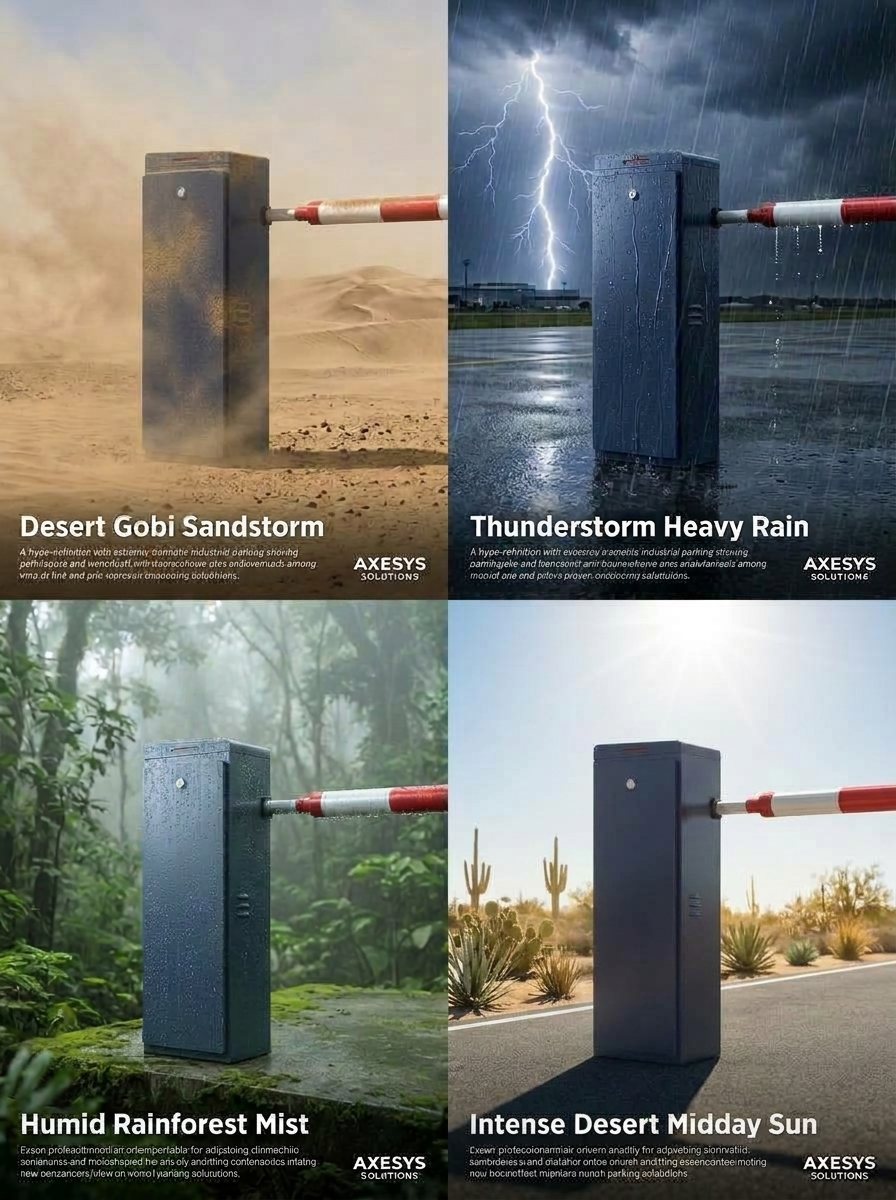
Also review the declared protection rating, the operating temperature range, and the environmental conditions permitted for the exact model. Dust, rain, solar radiation, humidity, and heat can affect the housing as well as the sensors and the control system. Do not automatically transfer the protection rating of one component to the entire installed system.
A heavy-duty barrier must be part of a complete safety design. Depending on the site and the configuration, induction loops, radar sensors, photocells, or other compatible devices may be used to detect vehicles or obstacles. Selection and location must be carried out considering the lane width, the movement of the arm, pedestrian routes, and the manufacturer's instructions.
Confirm how the controller responds when a sensor detects a vehicle, when an anomalous signal appears, and when power or communication is interrupted. Ask the integrator to document the opening, closing, detection, and emergency release tests. Never rely solely on driver attention or assume that a barrier includes all necessary sensors.
Also define the manual operation procedure and safe access for maintenance. Site managers must know how to isolate the area, stop access, and request technical assistance without entering the movement zone of the arm.
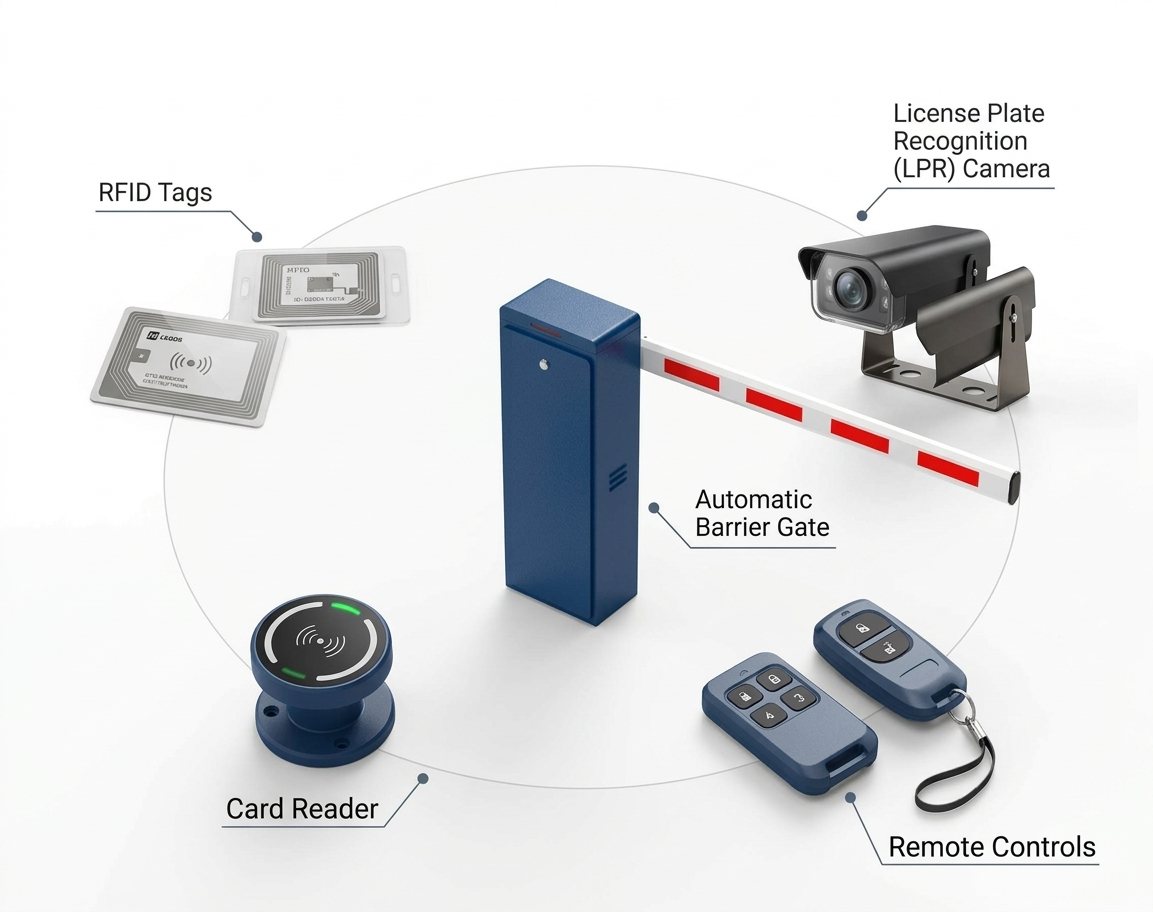
A barrier can receive the opening command from a remote control, an RFID/UHF reader, a ticket system, a QR code, or an ANPR/LPR license plate recognition platform, depending on the model and the compatible accessories. The best option depends on who uses the access point, how permissions are managed, and whether an entry and exit record is required.
In a warehouse or a manufacturing plant, RFID and license plate recognition can help automate the logging of authorized vehicles. In a visitor parking lot, a solution with tickets or QR codes may be more convenient. Before buying, verify the available interfaces, the compatible protocols, and the integration with the software the facility already uses.
Request a comprehensive test that includes identification, permission validation, opening, vehicle detection, closing, and event logging. If there are third-party components, ask for written confirmation of compatibility and define who will provide support when one part of the system fails.
Confirm the voltage, frequency, consumption, and protections required by the exact model. For installations in Mexico, ask about the 127 V / 60 Hz configuration and request the datasheet for the unit that will be supplied. Some lines support wider input ranges or DC brushless motor variants, but it should not be assumed that all versions share the same configuration.
The electrical installation, grounding, protection devices, and control wiring must be reviewed by qualified personnel in accordance with site conditions. If a backup battery or UPS is needed, confirm whether it is compatible, whether it is sold separately, and what autonomy it can provide under the expected load.
The purchase cost is only part of the total cost of ownership. Ask about the recommended maintenance program, the components that require periodic inspection, spare parts availability, the warranty, and support channels. For a critical installation, it is also advisable to define response times, personnel training, and a minimum inventory of key parts.
Check what the delivery includes: barrier, arm, supports, sensors, readers, controller, mounting accessories, manuals, and commissioning. Ask that the quotation clearly separate standard equipment, optional accessories, transport, installation, and any software integration.
To compare suppliers, use a common list of requirements instead of comparing only the final price. Each proposal should state the model, the arm length and type, the duty cycle, the specified opening time, the safety devices, the interfaces, the power supply, the warranty, and the spare parts included.
Ask that any performance figure include its test conditions. If a proposal promises higher speed, service life, or environmental resistance, verify that it corresponds to the quoted model and arm. Request written clarification on exclusions, civil works requirements, and installation responsibilities.
BAROXON Mexico presents categories for vehicle barriers, high-speed barriers, ANPR/LPR systems, automatic RFID barriers, radar sensors, and vehicle detectors, as well as accessories and spare parts. For high-demand access points, it is advisable to request a recommendation based on vehicle flow, lane width, the required arm, the environmental load, and the authorization system.
To receive a useful quotation, share photographs of the access point, lane measurements, estimated vehicle volume, vehicle types, clear height, wind and weather conditions, available power supply, and any control system already installed. Ask that the proposal specify the components included and the tests that will be performed before delivery.
The difference must be verified in the model specifications: duty cycle, mechanism, motor, supported arm length, environmental resistance, and maintenance availability. The commercial label alone does not prove that a unit is suitable for any high-traffic access point.
Measure the usable width of the lane and review the overhead space, the obstacles, and the wind conditions. Then confirm with the manufacturer the arm length and type supported by the selected model.
The configuration depends on the risk assessment, the controller, and the devices included. Confirm which sensors come with the equipment and which must be added, and require operating tests before enabling access.
Yes, when the barrier, the controller, the readers or cameras, and the software are compatible. Before buying, confirm the interfaces and request an integration test with the system that will be used at the site.
Confirm the requirements of the exact model and ask about the 127 V / 60 Hz configuration. The installation must be reviewed by qualified personnel, and any electrical backup must be specified in the quotation.
Select equipment sized for the actual load, follow the manufacturer's maintenance plan, train operators, and keep the recommended critical spare parts on hand. Avoid choosing undersized equipment simply because its initial price is lower.
Buying a heavy-duty vehicle barrier requires evaluating traffic demand, the arm, the motor, wind, environmental conditions, safety, integration, and after-sales support. The best option is the one that meets the documented requirements of the site and can be maintained throughout its service life, not necessarily the one that advertises the highest speed or the lowest price.


