In short: Learn how to choose an automatic vehicle barrier based on lane width, vehicle flow, arm type, safety, and RFID or license plate integration in Mexico.
Quick answer: To choose an automatic vehicle barrier, first measure the lane width and the available space; then calculate the vehicle flow during peak hours, define the type and length of the arm, select the authorization method, and verify the safety sensors. Finally, confirm the power supply for Mexico, compatibility with your access system, maintenance, and spare parts availability. The best option is the one that meets the real conditions of the site, not necessarily the one with the lowest initial price.
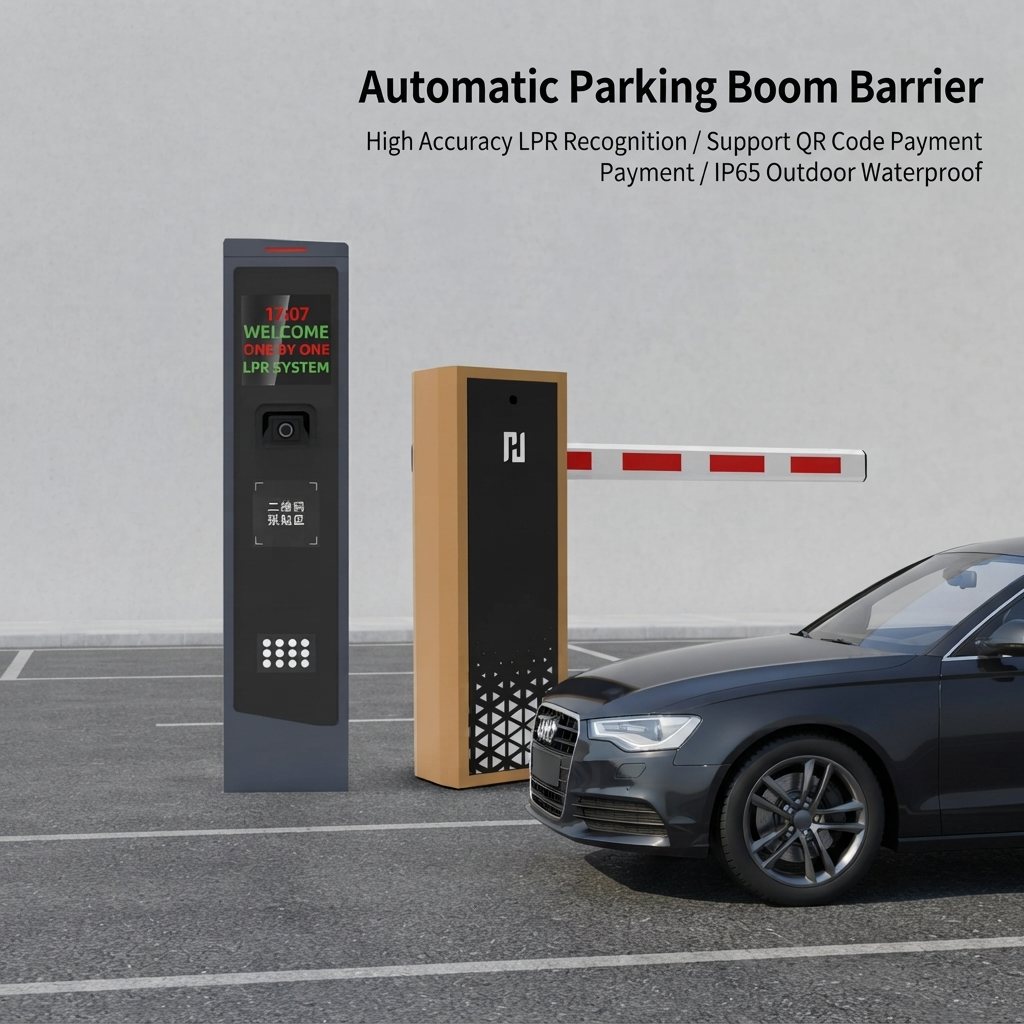
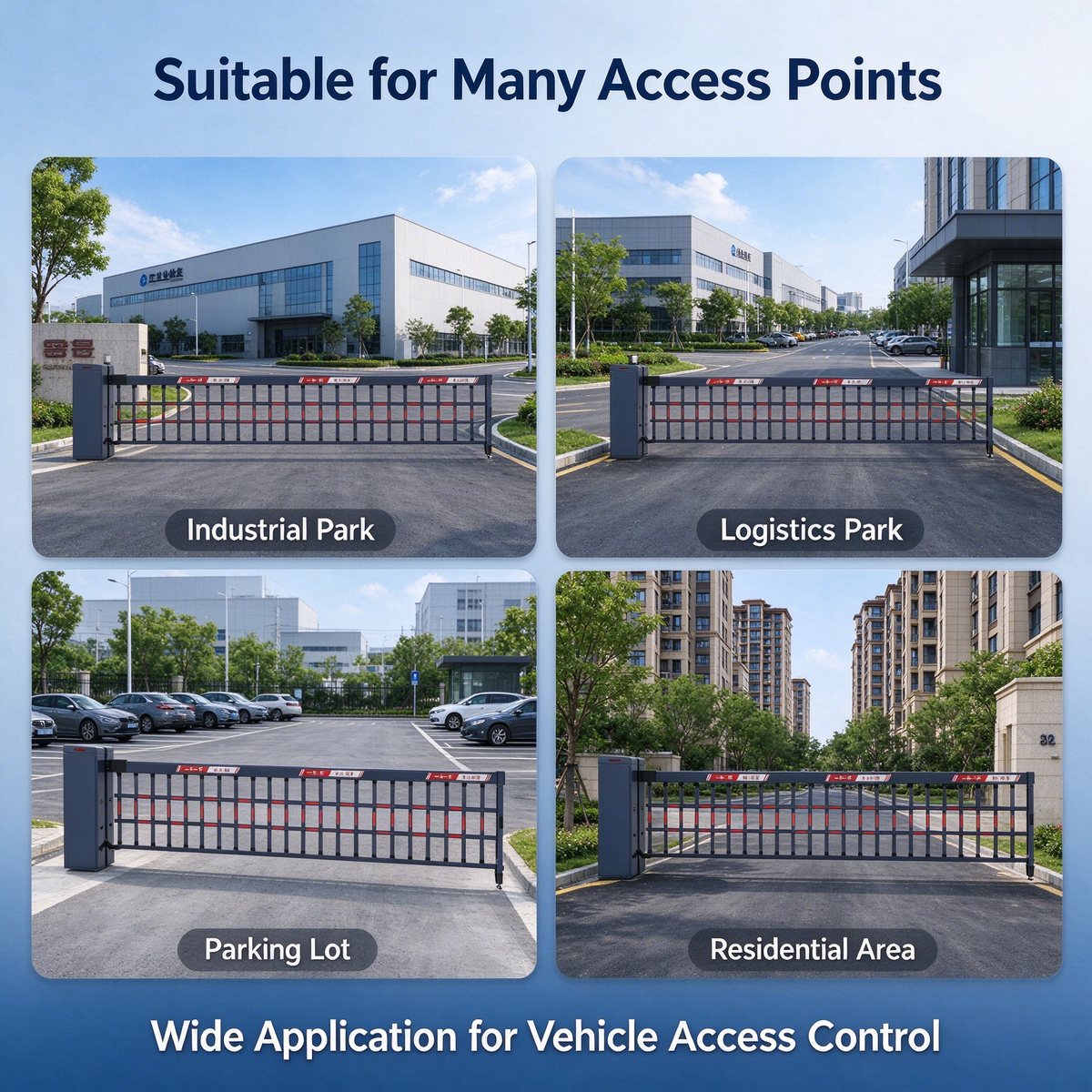
Before comparing models, define where the barrier will be installed and what problem it must solve. An office parking lot, a residential community, a manufacturing plant, and a logistics center may need different equipment even though they all control vehicles. Record who will use the access point, at what times, which vehicles will pass, and what level of traceability the operation requires.
As a starting point, classify the site into one of these categories: moderate-use access, commercial access with constant turnover, industrial access for heavy vehicles, or high-flow access with strict waiting times. This classification does not replace the technical calculation, but it helps delimit the features you should request from the supplier.
The arm length must cover the usable width of the lane without interfering with structures, signage, reading equipment, or the path of other vehicles. Measure the space from the mounting point to the opposite edge of the lane and consider where the cabinet, cameras, readers, and sensors will be placed. Do not choose the arm length solely from a product photograph.
Also review the clear height and the path the arm will follow when opening. In covered parking lots, ramps, or access points with nearby beams, a folding-arm barrier may be more suitable than a straight-arm one. The decision must be confirmed with the dimensions and installation diagrams of the specific model.
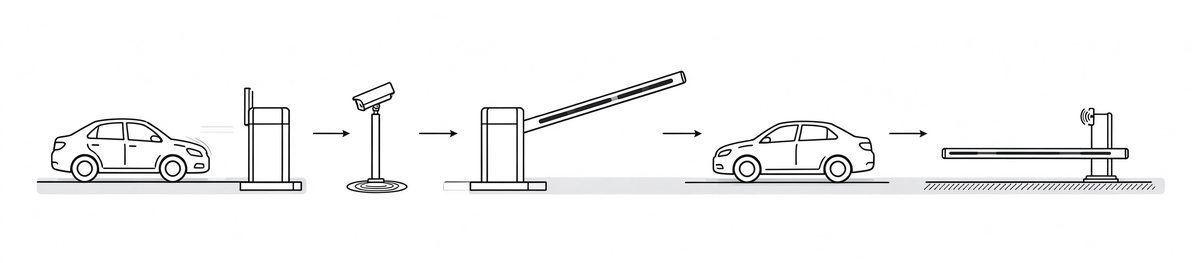
The number of vehicles per hour, the queues during peak hours, and the frequency of opening and closing determine much of the selection. At an entrance with little movement, a correctly configured standard solution may be enough. At an entrance with continuous traffic, it is worth studying a model designed for frequent cycles and comparing the opening time specified for the required arm length.
Do not compare the speed of two barriers without checking the measurement conditions. The time may vary with the length and weight of the arm, the controller settings, and the operating profile. Request the datasheet of the exact model and confirm whether the figure refers to full opening, a specific arm, or an optional configuration.
For high-demand access points, evaluate the complete design of the entrance: fast authorization, enough space for the vehicle to wait without blocking the road, reliable detection, and clear closing rules. A fast barrier will not by itself solve a queue caused by a poorly located camera, a slow read, or an incorrect system configuration.
The straight arm is usually appropriate when there is enough vertical space and a clear opening path. It can be used in open-air parking lots, office access points, commercial facilities, and private entrances. Length, visibility, and wind load must be verified according to the model and site conditions.
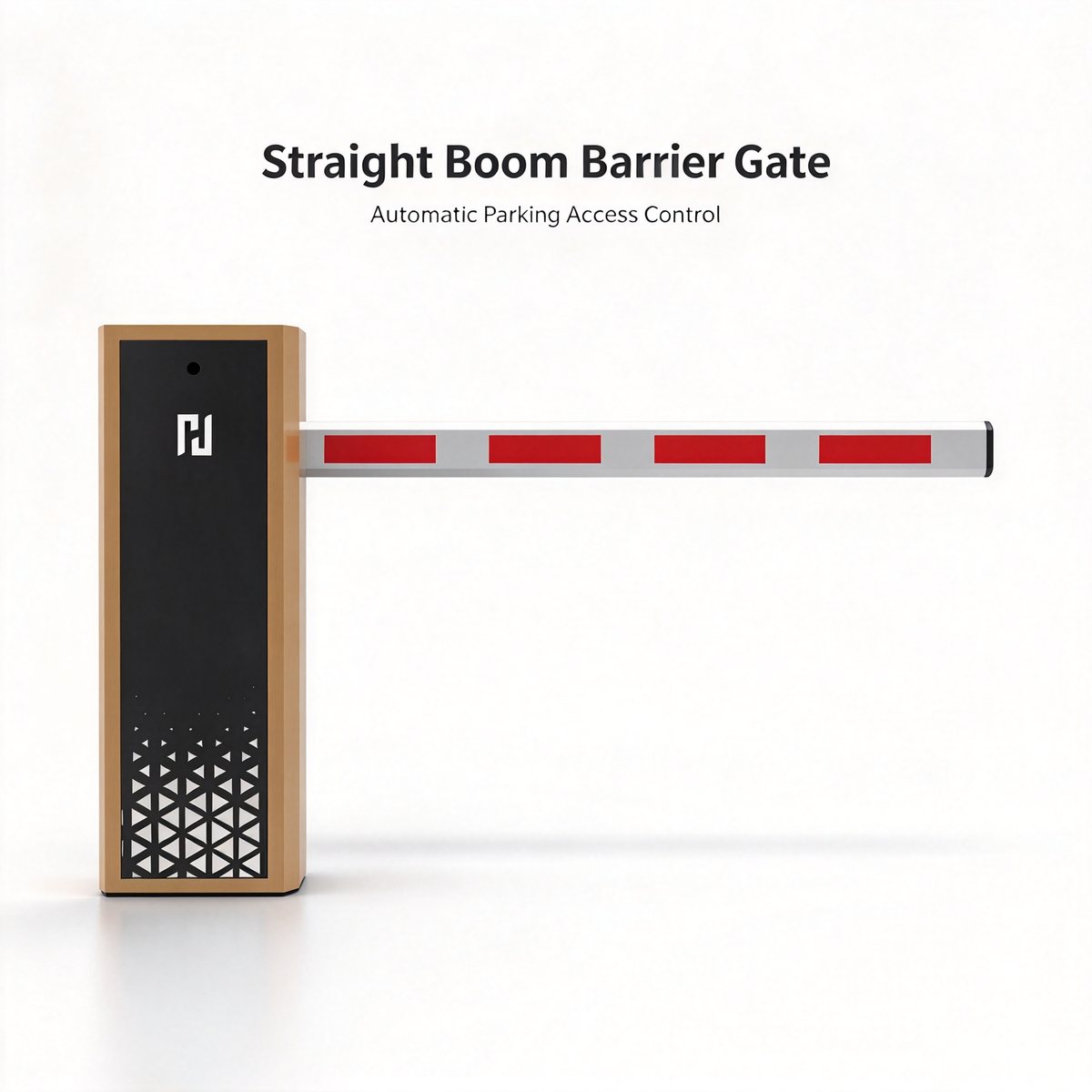
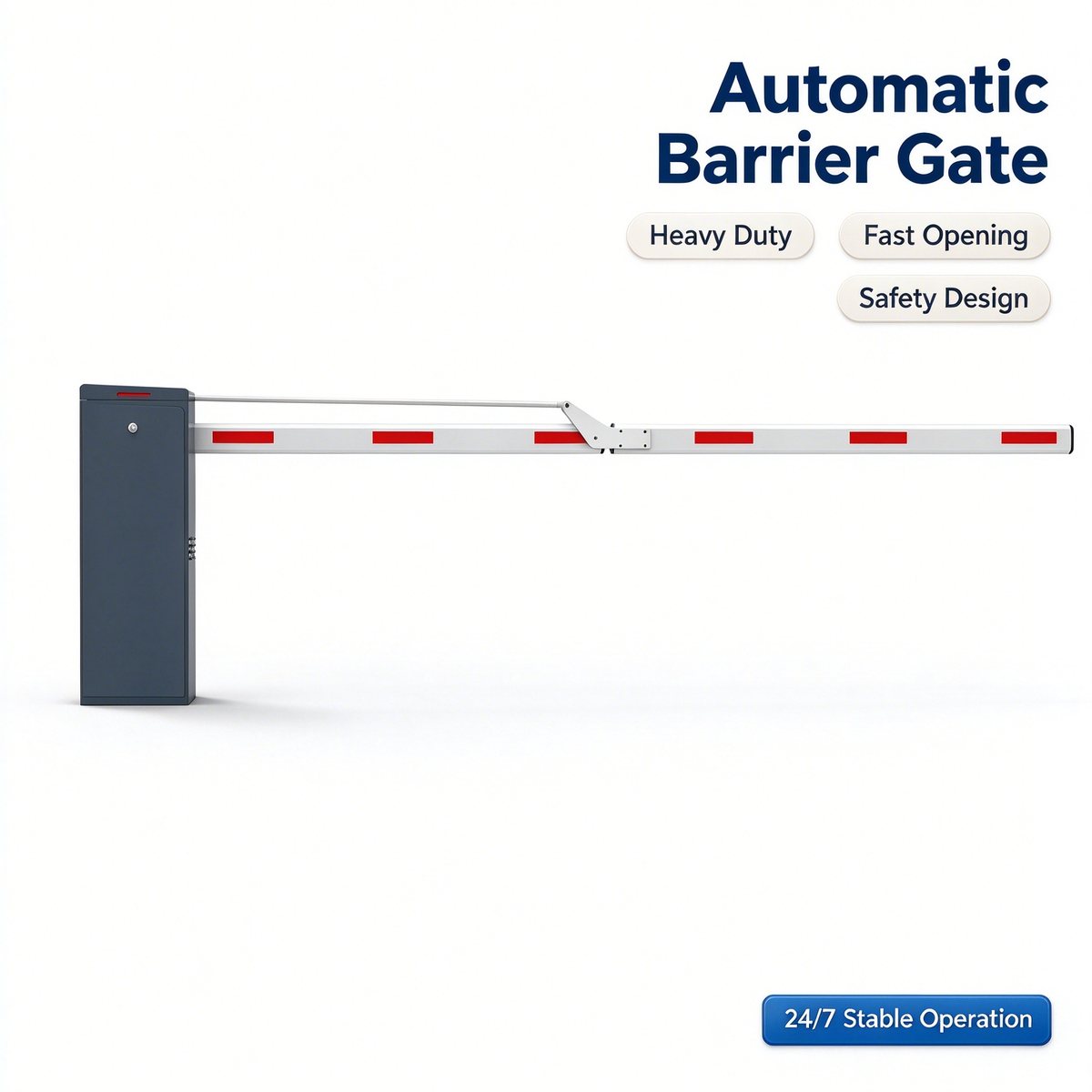
The folding arm is considered when the ceiling, beams, or the geometry of the access point limit the available height. Before installing it, check the type of joint, the space it occupies during opening, and the compatibility of the arm with the operator. Not all folding arms are suitable for all lengths or configurations.
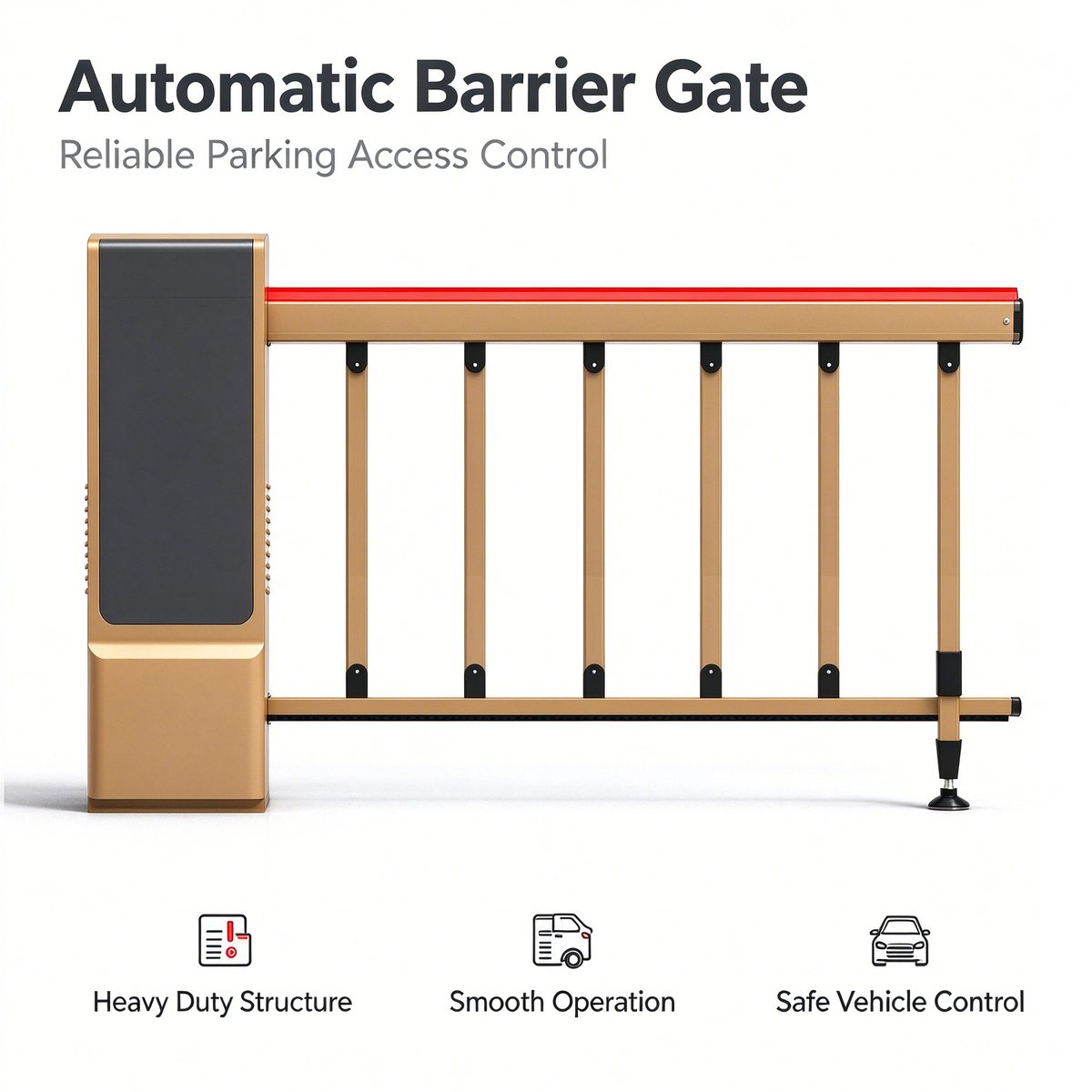
At certain access points, a grid-style arm can provide a more visible physical barrier. Its suitability depends on the lane width, wind exposure, visibility, and the manufacturer's recommendations. Expressly verify the compatibility of the assembly and do not replace the arm with another type without technical authorization.
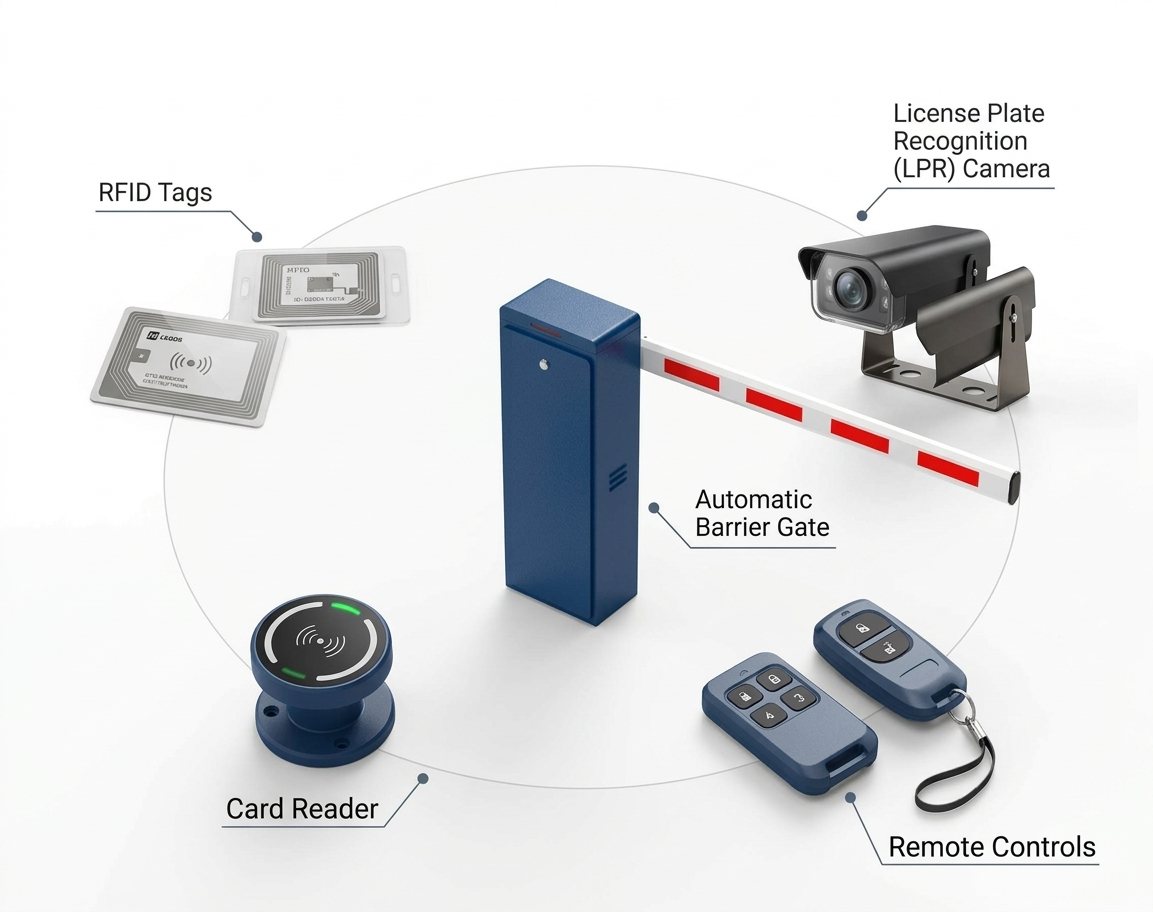
The authorization method must match the daily operation. A remote control can work for a small access point; RFID or UHF can speed up passage for registered users; a ticket or QR system can be useful in parking lots with visitors; and ANPR/LPR license plate recognition can automate access for previously registered vehicles. The choice depends on the software, the budget, and the operating rules.
Before buying, document how users will be registered, how a permission will be revoked, what will happen if the plate is not recognized, and how a visitor will enter. Also determine what records the administrator needs to keep and who will be able to consult that data.
A barrier can be part of a broader access system. BAROXON presents vehicle barrier solutions, high-speed barriers, ANPR/LPR license plate recognition, RFID barriers, radar sensors, and vehicle detectors. Depending on the model and configuration, these elements can work together to identify vehicles, authorize access, and manage movement in the lane.
Do not assume that all equipment is compatible with each other. Confirm the protocols, the available inputs and outputs, the signal type, the network requirements, and compatibility with third-party software. For a professional integration, request a connection diagram and a list of included and optional components.
Sensors play an important role in the safety logic. Depending on the design, an inductive loop or a radar sensor can help detect vehicles in the passage area. Sensor location, configuration, and testing must be part of commissioning; they should not be considered a substitute for a risk assessment or for the required safety measures.
For installations in Mexico, confirm the voltage and frequency of the exact version that will be supplied. The BAROXON site lists power options for the Mexican market, including the 127 V / 60 Hz configuration, as well as variants depending on the product. Verify the datasheet, the required current, the grounding, and the installation conditions before placing the order.
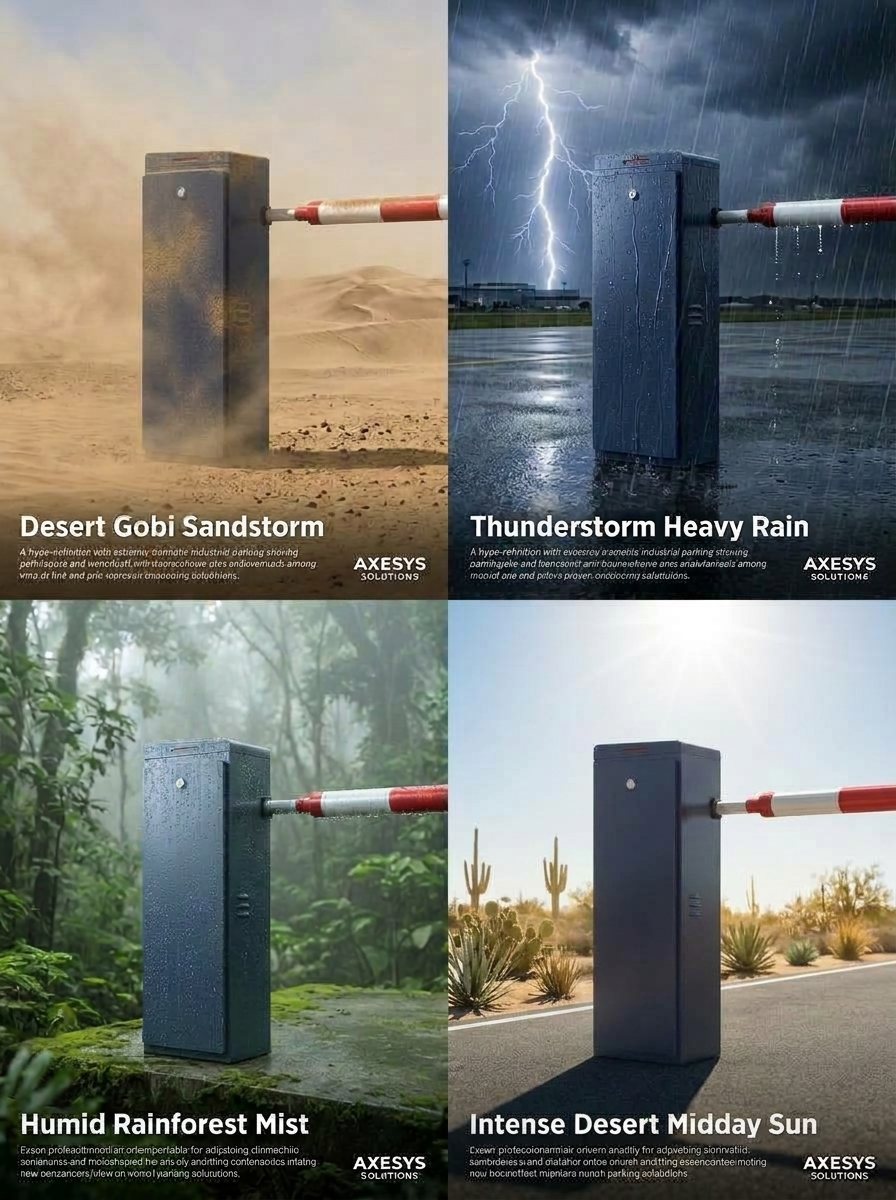
Also evaluate exposure to rain, dust, heat, humidity, wind, and possible impacts. If the barrier will be in an outdoor or industrial area, request the protection rating, the temperature range, and the operating conditions stated for the model. Do not extrapolate an environmental rating from one unit to the entire product range.
Ask about the recommended maintenance frequency, the parts subject to wear, the availability of spare parts, and the estimated time to receive assistance. At a critical access point, it is also worth defining the manual procedure for an electrical or communication failure, as well as how to keep the lane safe while the fault is resolved.
Request the installation manual, the electrical diagram, the configuration guide, and the maintenance instructions in a language the local team can use. Check what the warranty covers, which elements are excluded, and what remote support or training the supplier offers.
The budget must consider more than the price of the barrier. Include the right arm, sensors, readers, cameras, controllers, software, wiring, civil works, installation, commissioning, training, and maintenance. If it is an import, confirm in writing the scope of supply, packaging, production lead time, shipping method, and applicable commercial terms.
Compare proposals against the same list of requirements. A lower quote may exclude sensors, readers, or installation work that will later be necessary. A structured comparison helps avoid unforeseen costs and makes it possible to evaluate offers based on performance and real scope.
Before contacting the supplier, prepare this information:
The more precise this information is, the easier it will be for the supplier to recommend a suitable configuration and clearly specify which components are included. Ask the quote to identify the model, the selected options, the accessories, the installation, and any requirement that the buyer must resolve.
For a conventional vehicle access point, start with the vehicle barrier and access boom category. If the site requires frequent cycles, compare the high-speed options. If you need to automate authorization, review the ANPR/LPR or RFID solutions; for vehicle detection, study the radar sensors and compatible detectors. The final selection must be made with the datasheet and the scope of supply of the specific model.
BAROXON states that it offers direct supply to Mexico and Latin America, Spanish-language support, electrical options for the Mexican market, and customizable solutions for certain projects. Before deciding, request written confirmation of the specifications, compatibility, delivery time, warranty, and spare parts availability for the quoted configuration.
It depends on the width of the access point, the frequency of use, the available space, and the authorization method. For a single lane with moderate flow, a standard barrier may be enough; confirm the arm length, the safety functions, and future integration needs before buying.
It may be worth it when the vehicle volume and waiting time justify faster cycles. However, authorization, detection, arm length, and the lane's capacity to hold vehicles without blocking the public road must also be reviewed.
It is possible if the controller, the readers, the cameras, and the software are compatible. Share the existing brands and models with the supplier and ask them to confirm the protocols and interfaces before you buy.
Confirm the exact voltage and frequency of the quoted equipment and ask about the 127 V / 60 Hz version when applicable. Also review grounding, electrical protection, and site conditions with a qualified installer.
Send the lane width, photos, estimated vehicle flow, clear height, authorization method, required sensors, power supply, and any existing system that must be integrated. Also include the number of lanes and the project schedule.
Choosing the right automatic vehicle barrier requires evaluating the site as a complete system: dimensions, traffic volume, arm, authorization, sensors, power, integration, and maintenance. A clear specification makes it possible to compare suppliers with objective criteria and reduces the risk of buying equipment that does not match the real conditions of the installation. For projects in Mexico, confirm the local electrical configuration, the Spanish-language documentation, and the availability of support and spare parts before approving the purchase.


